


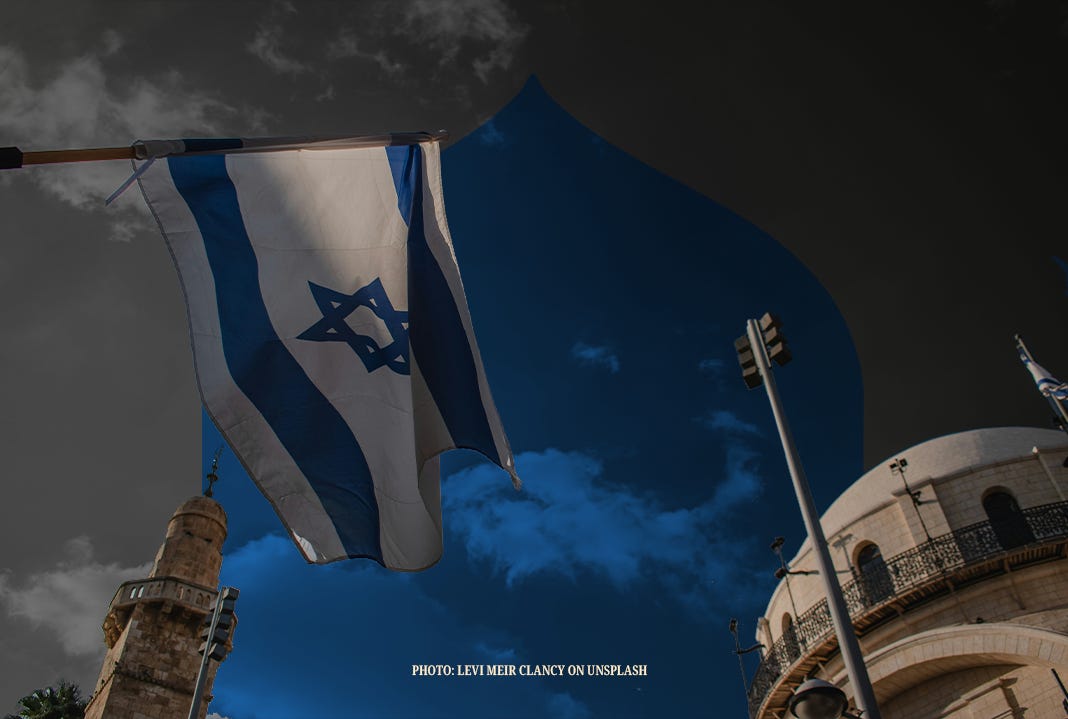
Israelis will go to the polls on October 27, in what may be one of the most consequential elections in the country’s history.
Four issues are likely to decide how the ballots are cast: security, the question of Haredi conscription (should ultra-Orthodox Jewish men be required to serve in the Israeli military), the cost of living, and the continuing fight over the government’s efforts to give elected officials greater power over the judiciary. For Palestinians watching from Gaza, the West Bank, and the diaspora, the calculus is entirely different. What matters to us is where each party stands on a Palestinian state, how it intends to handle the settlements and settler terrorism, and what it has in store for Gaza in a post-war scenario.
Since October 7 and the war that followed, Israel’s parties have settled into three broad camps on Palestinian statehood. Two are held by the parties competing for power. The third belongs to a small minority: the Standing Together movement and the four Arab-led parties running for the Knesset.
The first camp sees the very idea of a Palestinian state as a threat and says so plainly. This is where Likud sits as the standard bearer of the right. It is also where Gadi Eisenkot has positioned his new centrist party, Yashar, which has topped several recent polls as the largest single faction in the Knesset, exceeding the Likud, and Eisenkot himself led Netanyahu for the Prime Minister position in many polls. After the United Arab List’s Mansour Abbas called for an end to the occupation and the recognition of a Palestinian state, Eisenkot answered on X: “There is no Palestinian state, and in the government we will form, no Palestinian state will arise.”
Naftali Bennett and Yair Lapid’s joint list, Beyachad, occupies the same camp, though the two men arrived there by different paths. Bennett has spent years building a public record of opposition to Palestinian statehood and has said he stands “against giving away an inch of land.”
Lapid has at times loosely gestured toward a two-state solution, but when the two merged their parties this year, aides made clear that the Palestinian question simply isn’t on the table. What unites them is a shared refusal to address it.
The religious Zionist camp needs no such hedging. Ben-Gvir’s Otzma Yehudit and Smotrich’s Religious Zionism reject Palestinian statehood, full-stop. They support extending Israeli sovereignty over the West Bank and expanding the settlements there.
The second camp opposes the occupation but avoids explicitly endorsing a two-state solution or offering a viable alternative.
This is the terrain occupied by Yair Golan’s Democrats, what is left of Israel’s organized left. Golan, a former IDF general and a sharp critic of Israel’s conduct during the war, opposes annexation of the West Bank and has built a career distancing himself from the settler right.
But even he has grown careful with the term “two-state solution.” When European governments began recognizing Palestine last year, Golan called the move “destructive” and “extremely damaging” to Israel.
The only parties that support a Palestinian state without qualification are the ones led by Palestinians themselves. Hadash, Israel’s Marxist party, along with Balad, Ta’al, and the Islamist Ra’am, hold a combined handful of seats in a 120-member Knesset, and they are the only voices in Israeli politics still willing to say, plainly, that a Palestinian state should exist.
Netanyahu can no longer present opposition to Palestinian statehood as something that clearly separates him from his main rivals. He is campaigning in an election in which his challengers have adopted part of his position while his coalition partners demand that he take it further.
On Gaza, the coalition and the opposition find rare agreement: there will be no Israeli withdrawal before Hamas disarms.
Others like Ben-Gvir’s Otzma Yehudit, the Religious Zionism party, and Ofer Winter’s newly launched Amcha Yisrael all speak of what they call “voluntary migration.” Winter, a former IDF general who entered politics just weeks before this draft was written, has said there will be “voluntary emigration from Gaza” and that no Palestinian state will ever exist. What these parties describe as voluntary is, in practice, a policy of making life in Gaza so unbearable that its people leave of their own volition, clearing the path for settlement expansion.
Expanding Israeli settlements in the West Bank has been a major priority for the current coalition since it took office in 2022, driven by ideological, religious, and political goals.
In less than four years, the government has authorized more than 100 settlements and moved to reestablish settlements dismantled in 2005, including Homesh, Sa-Nur, Ganim, and Kadim. It has also advanced plans for thousands of settlement homes in E1, a strategically located area east of Jerusalem where construction could further divide Palestinian territory and make a contiguous Palestinian state more difficult to establish.
This expansion has coincided with an unprecedented wave of settler violence against Palestinians. Settlers have shot and killed people, set homes, mosques, and vehicles on fire, besieged families in their homes, and kidnapped Palestinians and international activists. There have also been reports of sexual violence, elderly residents being beaten with clubs, and attacks on animals.
The government, for its part, did nothing but issue more support to the settlement enterprise, with the Finance Minister driving its expansion. The National Security Minister went further, expanding gun license eligibility to settlers across dozens of West Bank settlements since 2023, with over 240,000 permits issued under his policy by 2026, even as the same settlements produced a documented average of five attacks against Palestinians a day the previous year.
After drawing widespread condemnation from European and Arab capitals and calls for sanctions from European officials, the government opted to issue soft condemnations but made no policy changes. No one was arrested, financial support continued, and more outposts were awarded to the settlement enterprise, further reinforcing settlers’ sense of impunity.
The difference between the current coalition’s plans and the opposition is that the coalition promises to establish more settlements and fully annex the West Bank. The far-right parties have also called for dismantling the framework established by the Oslo Accords, the 1990s agreements that created limited Palestinian self-government in parts of the West Bank and were intended to lead toward a broader Israeli-Palestinian peace agreement.
Opposition figures like Gadi Eisenkot and Bennet oppose annexation and projects like the E1, but they have no intention of stopping settlement expansion or evacuating existing settlements. From their point of view, there should be a crackdown on violent settlers because of the damage they cause to Israel’s reputation.
Israelis will spend the coming weeks arguing over who is fit to lead them through a security crisis, a rising cost of living, a fight over the future of the judiciary, and a debate over who serves in uniform.
For anyone watching from Gaza, the West Bank, or the Palestinian diaspora, the stakes are different. We are watching to see how the next Israeli government intends to govern their lives and what political future, if any, it leaves open to them.
Israeli voters are entitled to weigh their considerations as they see fit. But no name on that ballot, from the settler right to the war generals now running as centrists, has any intention to diplomatically address the Palestinian question or the settlement enterprise.
For Palestinians, there are no good options. Palestinians in Gaza and the West Bank cannot vote in this election, yet its outcome will help determine whether settlements expand, whether annexation advances, what happens to Gaza, and whether any path toward Palestinian statehood stays open. An election in which they have no say will determine their fate.
Read more about why ending settler violence is in Israel’s interest:
Ending Settler Violence Is in Israel's Interest

Across the West Bank, Palestinian communities are facing a steady rise in attacks by Israeli settlers. Homes have been torched, agricultural land destroyed, and residents beaten or driven from their villages. The violence has become a source of growing concern not only for those living through it, but also for neighboring states watching the consequence…
Middle East Uncovered is powered by Ideas Beyond Borders. The views expressed in Middle East Uncovered are those of the authors and do not necessarily reflect the views of Ideas Beyond Borders.
If Palestinians elect a leader in their upcoming democratic elections who asks for a two-state solution as an alternative to the unlimited right of return, I have confidence Israeli politics would shift far to the left. Palestinians have the power to persuade Israelis a sovereign neighboring Palestinian state would not attack Israel to liberate the remainder of occupied Palestine.
You don't need to agree that Israel has a right to exist or anything silly like that. Just make it clear you prefer sovereignty to achieving justice through war. I.e. whatever Jordan has. A cold peace. That's good enough. Just not Hamas.
"On Gaza, the coalition and the opposition find rare agreement: there will be no Israeli withdrawal before Hamas disarms."
"For Palestinians, there are no good options. Palestinians in Gaza and the West Bank cannot vote in this election, yet its outcome will help determine whether settlements expand, whether annexation advances, what happens to Gaza, and whether any path toward Palestinian statehood stays open. An election in which they have no say will determine their fate."
So what you're saying is that if the 2 million Gazans succeed at disarming Hamas then Israel is far more likely to withdraw? Seems like a good option to me. Either they have agency or they don't.