


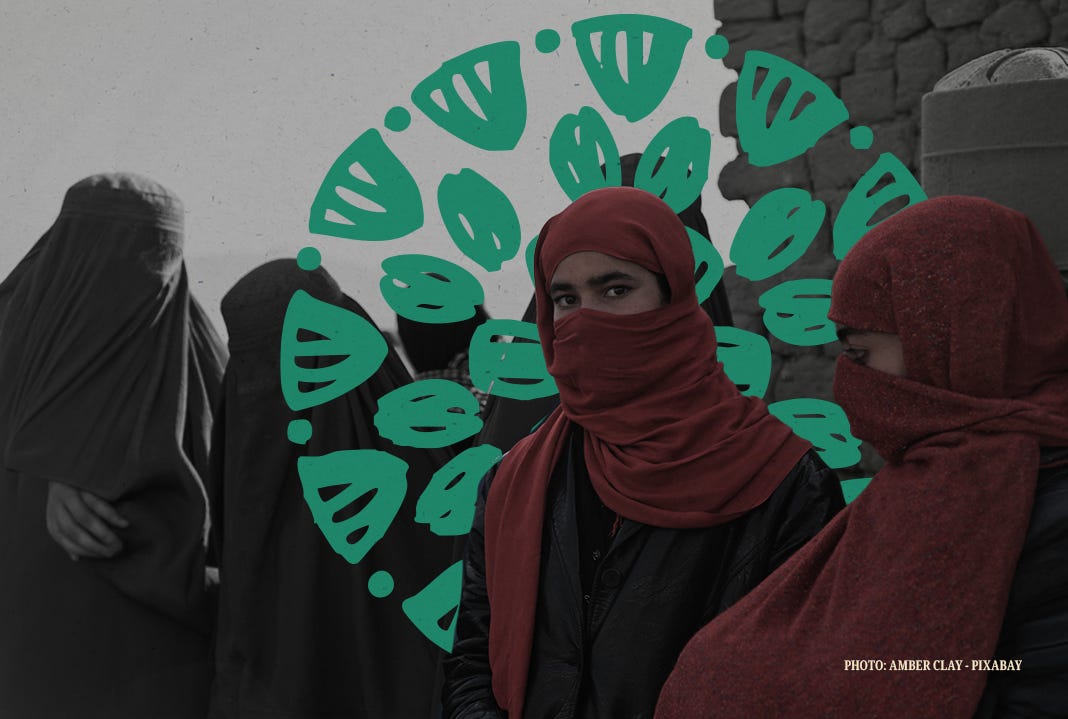
Nearly 35% of Afghan women aged 15 to 49 have experienced physical or sexual violence from an intimate partner over a 12-month period, almost three times the global average of 13%, according to UN Women’s Afghanistan Gender Index. The report also found that nearly eight in ten young Afghan women were excluded from education, employment, and training.
These figures take on particular significance today, the International Day for the Elimination of Violence against Women. Under Taliban rule, Afghan women and girls face severe restrictions on their freedom, while the loss of legal protections and support services has made it even harder for survivors of abuse to seek help.
For some, a newly reopened refugee pathway to the UK could offer a way out.
Afghan women and girls will be among those prioritized as Britain reopens its main refugee resettlement route. The UK Resettlement Scheme (UKRS) offers a “safe and legal” pathway to the country, with the first arrivals expected before the end of the year. But places will initially be limited to hundreds, leaving questions about how many people the scheme will ultimately help.
British Home Secretary Shabana Mahmood said the UK wants to “live up to our international obligations” and “bear down on small boat crossings.”
Those accepted will be placed on a five-year path to permanent settlement. Refugees resettled under the scheme before it closed last year have received support from local councils, including housing, healthcare, education, English classes, and help finding work.
Hundreds are expected initially, rising to the low thousands as legal routes aim to reduce the numbers resorting to illegal migration. Afghan women and girls and Palestinian refugees fleeing war and persecution will account for around 1 in 4 of those referred, who will then be chosen via a strict selection model rather than on an application basis.
Partner organizations, including the United Nations Refugee Agency (UNHCR) and the International Refugee Assistance Project (IRAP), will identify candidates for the scheme based on “established processes,” the UK Home Office said, with no option for people to apply directly.
A cap will be set for each year, though numbers have not yet been announced.
Aid agencies welcomed the news while calling for plans to be expanded. “UKRS is a well-established safe route providing lasting protection for recognized refugees, giving them the support they need to rebuild their lives in the UK. But it needs to be scaled up if it is to make a real difference,” Flora Alexander, Executive Director of the International Rescue Committee UK, said.
Afghan women and girls are living through one of the world’s worst hunger crises, denied access to education, employment, and adequate health care in a country ravaged by years of conflict. They “must not be forgotten by the international community,” she added.
Three new sponsorship pathways have also been announced, offering more alternatives to the treacherous channel crossings, where at least 162 people have died trying to reach British shores since 2018.
Eligible universities, companies, and community groups will be able to nominate recognized refugees for consideration and support them through higher education and employment. The first people to arrive under these schemes are expected in autumn 2027.
“Sponsorship schemes can build on the best of the Ukrainian and Afghan programs, which saw thousands of refugees being supported by local communities across the country,” Jon Featonby, chief policy analyst at the Refugee Council, said.
However, the announcement comes amid a “drastic reduction in safe routes over the last year,” he added.
The country’s two key resettlement routes for Afghans closed without warning on July 1, 2025. This was a deliberate move to prevent a surge in last-minute “unmeritorious” applications, the government said.
At the time, more than 34,000 Afghans had been resettled in the UK under the Afghan Relocations and Assistance Policy (ARAP) launched in April 2021 for staff who served alongside British forces, and the Afghan Citizens Resettlement Scheme (ACRS), which was launched in January 2022 and prioritized human rights defenders, women, and ethnic minorities.
Many vulnerable Afghans were left stranded amid mounting security risks and intensifying restrictions on the freedom of women and girls. The abrupt closure came as large numbers of refugees who had fled to neighboring countries, including Pakistan and Iran, were being forcibly returned amid aggressive deportation campaigns.
Darius Nasimi, head of funding and partnerships at the Afghanistan & Central Asian Association in London, said the closure meant “many vulnerable Afghans have been left facing considerable uncertainty about their futures.”
Nasimi, whose family came to the UK in 1999 after fleeing Afghanistan under the first Taliban regime, said the new sponsorship pathways present an important opportunity for experienced refugee-led organizations to contribute directly to the UK’s humanitarian response.
“The United Kingdom has a proud history of providing sanctuary to those fleeing persecution. We hope the reopening of this scheme, alongside the development of new sponsorship pathways, will provide meaningful opportunities for vulnerable refugees to rebuild their lives in safety and dignity,” he added.
In September 2025, the UK government also issued a pause on new applications for the refugee Family Reunion Route, pending new rules that have yet to be announced. The suspension has prevented around 20,000 refugees from applying to join family in Britain, according to Refugee Council estimates.
More than 18,565 people have crossed the English Channel in small boats this year, a decline from the same period in 2025, when 32,188 made the journey across one of the world’s busiest and most dangerous shipping lanes.
The UK government is under pressure to curb small boat crossings and tackle the people smuggling gangs behind them. Anti-immigration marches across England over recent weeks have seen hundreds of people gather in coastal towns, including Southampton and Dover, with some wearing black clothing and face coverings.
At least 28 anti-migrant groups have formed since the summer, according to a Guardian survey, with some trying to intercept the boats themselves.
Mahmood told the Labor Party conference last month that her approach towards immigration is governed by “fairness” and that communities must be “ready and able to welcome those who come here.”
The UKRS is a route for people to come to the UK as refugees, meaning they don’t have to claim asylum on arrival. Aside from a limited exception for people in France to enter the UK via the one-in, one-out scheme, there is no way to submit an asylum application from overseas.
For Afghan women and girls, the reopened scheme offers a rare legal route out of Afghanistan, escaping a life where they are shut out of schools and most forms of employment. Aid agencies say the test will be whether the UK government can offer more places at a time when immigration remains a fraught issue in British politics.
“Safe and legal routes are essential to undermining people smugglers’ business model, but they only work if they operate at scale,” Featonby said.
“The Government has to show ambition and commitment, and that means thousands of places, not hundreds. Alongside any new schemes, the Government must also reopen refugee family reunion without delay.”
You might also be interested in:
The Chilling State of Maternal Health in Afghanistan

On a frosty morning in November 2021, in the early months after the United States-backed government fell to Taliban rule, I walk into the mottled, rundown halls of Kabul’s Indira Gandhi Children’s Hospital. Three male doctors with greying hair and weary eyes amble in and out, struggling to keep up with the impossible demand.
Middle East Uncovered is powered by Ideas Beyond Borders. The views expressed in Middle East Uncovered are those of the authors and do not necessarily reflect the views of Ideas Beyond Borders.
It's a great move. ✌👍