


Since the U.S.-Israel war on Iran began, Saudi Arabia, the UAE and even Qatar, which has been trying to mediate the conflict, have come under attack. All six Gulf Cooperation Council countries have been hit. Trying to stay out of the war has not kept the war out of their countries.
Airports have shut down. Energy facilities have been hit. Investment decisions have been put on hold. These countries tried to avoid the war, and they are still paying for it.
The explanation Iran gives is the presence of American military bases. But that is not as straightforward as it sounds.
As Muhanad Seloom, an Iraqi scholar and an assistant professor in Critical Security Studies at the Doha Institute for Graduate Studies, put it in a November 9 post on X, translated from Arabic: “The military bases are Gulf bases, not American bases. They are fully subject to these states’ sovereignty under the terms of military and defense agreements with specified conditions and time limits.”
American forces are there under agreements with the governments hosting them. Qatar, for example, financed the construction of Al Udeid and hosts U.S. forces through a defense cooperation agreement. These are decisions made by Gulf states about their own security.
And frankly, Iran keeps proving the case for the very security agreements it says are the problem.
If you threaten your neighbors, arm groups that attack them and then launch missiles at them yourself, why would they not look for protection?
Even if we take Iran’s explanation at face value, the attacks extend far beyond the bases themselves. What does damaging Qatar’s gas industry have to do with an American military base? What about civilian airports, oil facilities and the businesses that depend on them?
In March, Iranian attacks knocked out 17 percent of Qatar’s LNG export capacity, resulting in an estimated $20 billion in lost annual revenue and repairs expected to take three to five years. This is Qatar, a country that has spent considerable time trying to keep a diplomatic channel open with Iran.
In Dubai, the damage goes straight into the economy people have spent decades building. By the third quarter, the total value of residential sales was down 47 percent from a year earlier, while the number of transactions had fallen 38 percent. Property prices themselves were estimated to have dropped by 5 to 15 percent between the end of 2025 and September. Those are different measures, but they tell you buyers are pulling back. The war and the attacks are major part of that story.
By April, flight departures were down by roughly two-thirds in Dubai and three-quarters in Doha, with near-total suspensions in Kuwait City and Manama. Early estimates put the impact on international visitor spending across the Middle East at least $600 million a day.
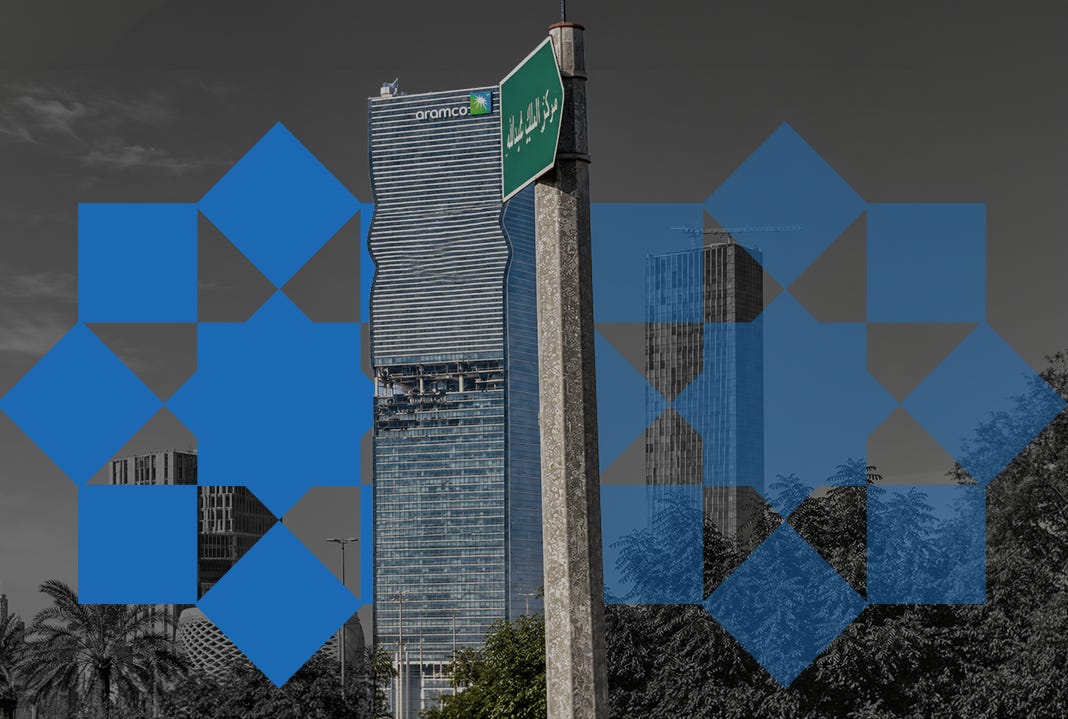
Then look at Saudi Arabia. Houthi attacks shut down King Khalid International Airport for two weeks, killing 14 people. The Future Investment Initiative was postponed until 2027. Earlier in the war, Iranian drones struck Aramco’s Ras Tanura refinery, while the Shaybah oil field came under repeated attack. And as of today, Aramco’s headquarters in Riyadh was also targeted.
The Houthis have their own war with Saudi Arabia and the official Yemeni government, so we should not assume Iran orders every missile launch. But their attacks add another way to put Saudi Arabia under pressure, including by threatening export routes that bypass the Strait of Hormuz.
I think Iran believes the Gulf states have enough influence over Donald Trump to make him stop the war.
You can see how they might arrive at that conclusion. Trump talks constantly about investment and deals. He has been celebrating a $1.4 trillion UAE investment framework, $1.2 trillion in Qatari economic exchange, and a $600 billion Saudi commitment. These are pledges and frameworks set to unfold over time, not money already transferred. But politically, the numbers matter to him. Qatar even gifted the U.S. government a Boeing 747 to be converted into a presidential aircraft.
So the Iranian calculation may be to hit the countries Trump wants to do business with, damage their economies, and let them put pressure on the administration. If their airports are closed and investments threatened, surely they will pick up the phone and call the president of the United States.
The Saudis, Qataris and Emiratis also have considerable access in Washington. They have built lobbying networks and relationships with universities and think tanks, and spent years making sure their interests are heard.
But this is where Iran may be getting it wrong. Being able to speak to Trump is different from making him listen. Influence in the Washington establishment does not necessarily translate into influence over his next decision. Other advisers, political constituencies and relationships compete for his attention.
Has Saudi Arabia’s refusal to join the Abraham Accords affected how Trump treats the kingdom? He clearly wants normalization. In August, his administration said the proposed Saudi civil nuclear agreement would move forward only if Riyadh joined the accords. He is already attaching conditions to the relationship. Whether inadequate protection against attacks is also a form of pressure is a possibility worth examining, but it has not been established.
Either way, Saudi Arabia has to deal with its situation. Having a common enemy with Israel does not automatically mean Israel will provide security for Saudi airports or oil infrastructure. And if Riyadh is unsure what Washington will do, it makes sense that it would look elsewhere.
That helps explain the turn toward Turkey and Pakistan. Turkey’s parliament ratified its defense pact with Saudi Arabia in early November. But here is the problem: agreeing to help defend Saudi Arabia and being willing to fight Iran are two different commitments. These countries have their own relationships to protect and their own reasons to avoid a wider war. They are hedging, too. I would not call them Iranian allies, but I would question how far they are prepared to go.
Syria is interesting for a different reason. Many of the people now in power fought the Assad regime that survived for years with Iranian help. Their distrust of Tehran comes from what happened to their own country. That could make Syria a more committed partner against Iranian influence. Still, Syria is busy rebuilding after a devastating war, and even al-Sharaa has spoken of possible relations with Iran based on noninterference. Strong feelings about Iran do not automatically give Damascus the capacity or appetite to fight it.
I am also skeptical about how far Egypt would go, although Sisi has publicly offered to defend Saudi Arabia if asked. There is a difficult political question for him: how would Egyptians react to their military fighting Iran after it did not intervene militarily in Gaza, right across their border? That does not mean Egypt will do nothing, but the kind of tangible support Cairo offers matters much more than a general statement of solidarity.
Then there is a reason I think gets less attention: the Gulf’s success.
Imagine being Iranian and looking across the water. You see countries with substantial energy wealth, like your own, that have built functioning infrastructure and attracted businesses, investment and people from around the world. Dubai has a large Iranian community, including people whose businesses and livelihoods have now been threatened by attacks from their own government.
At some point, the comparison becomes hard to avoid. Why have their neighbors been able to build this while Iran has not?
I think that comparison is uncomfortable for the Iranian regime. Its neighbors’ success makes it harder to explain away its own failures. If the countries across the water can build better lives for their people, the problem clearly goes beyond oil, geography, or being in the Middle East. Damaging those economies weakens regional rivals and makes the comparison less embarrassing. A regime that cannot offer its people the same opportunities has an incentive to make the alternatives look less successful.
Finally, there is destabilization itself. I think part of the calculation is to damage these economies badly enough that the pressure eventually turns inward, against the governments in Bahrain and Saudi Arabia. If businesses suffer, jobs disappear, and people lose confidence in their leaders’ ability to protect them, Iran has more grievances to exploit.
Some Iranian hardliners are also quite open about how they see Bahrain. On October 24, Hossein Shariatmadari, editor-in-chief of the hardline Kayhan newspaper, said: “Bahrain belongs to us. When the time comes, we will take it back.”
Read that again. He is talking about taking over a sovereign neighboring country. Shariatmadari is an editor of a government-approved newspaper, but the ambition he is expressing goes well beyond removing an American military base.
Bahrain has a particular reason to worry about that ambition. Some Bahrainis have publicly praised Iranian attacks, while the authorities have cracked down on clerics they accuse of promoting allegiance to Tehran. Families of defendants and rights groups describe the crackdown as repression. The war is already deepening internal divisions. Meanwhile, Iranian hardliners have revived the language of Bahrain as Iran’s “14th province,” despite Iran formally abandoning its territorial claim in 1970.
The bet would be to turn economic damage into political anger, use existing sectarian divisions and encourage a revolt that weakens or eventually removes a hostile government. Bahrain is the most obvious concern, but Saudi Arabia’s Shia population in the Eastern Province gives Tehran another community whose grievances it would like to exploit.
Of course, being Shia does not make someone loyal to Iran. The distinction is between citizens with grievances and a foreign government trying to turn those grievances into leverage. Tehran benefits when the two become confused.
None of these explanations requires Iran to believe it can defeat the United States outright. It only needs to believe it can make the war costly enough for everyone else that they start pushing for an end Tehran can live with, as we may already be seeing in the fallout from the U.S. midterms.
You do not have to destroy Dubai to hurt Dubai. You can make people hesitate before buying a home, opening a business or booking a flight. You do not have to destroy Saudi Arabia’s economy to damage its plans. You can close an airport and make the next conference feel like a security risk.
That, to me, is the logic behind these attacks. Iran is trying to use what the Gulf states have built against them. They have a lot to lose, and Tehran is betting that this will make them easier to pressure. But there are two conclusions the Gulf states themselves should draw from this.
The first is that hedging has failed to keep them out of the conflict. They can refuse to join the U.S.-Israeli war, keep talking to Tehran and offer to mediate. Iran can still decide that their relationship with Washington makes them participants. Their declaration of neutrality does not settle how Tehran treats them.
And what exactly are they supposed to do to change that? Cancel their security agreements with the United States? Remove the forces they invited to help protect them? That would mean giving up protection in the hope that the country attacking them would become less threatening. There is very little room to satisfy a demand like that without putting their own security relationship with Washington at risk.
The second conclusion is that development depends on security. You can build airports, attract investment and announce the next major project, but all of it depends on people believing that what you have built will be protected. At some point, defending that stability requires more than intercepting the next missile and hoping the next round of diplomacy works.
This is where I think the Gulf states should be willing to support opposition forces inside Iran, particularly independent Arab political movements in Ahwaz region.
Ahwazi Arabs, many of whom live what Iran calls “Khuzestan,” have their own reasons to demand change. They face discrimination in education, employment, housing and political office, alongside economic hardship and restrictions on their language. These grievances belong to the people experiencing them; they were not invented in Riyadh or Abu Dhabi.
Why should Arab governments leave those voices without meaningful support while Tehran works to build influence inside Arab countries? They should give independent Iranian Arab movements greater political backing, help their voices reach wider audiences and make their rights part of their dealings with Iran. Iranian Arabs will have different views about their country’s future. Supporting them means taking those views seriously, rather than assuming that shared ethnicity produces a single political position.
Iran has spent years making other countries deal with the consequences of its regional ambitions. The Gulf states should make Tehran confront the political consequences of its own treatment of people inside Iran as well.
Saudi Arabia tried to stay out of this war and got attacked anyway. The Gulf states cannot keep treating each new missile or drone strike as something to survive and move on from. At some point, they need a strategy that gives Iran something to worry about, too.
Middle East Uncovered is powered by Ideas Beyond Borders. The views expressed in Middle East Uncovered are those of the authors and do not necessarily reflect the views of Ideas Beyond Borders.