


“What It’s Like To Be” takes readers inside the lives of people working in remarkable and often demanding professions across the Middle East. Each installment offers an intimate look at the realities shaping their daily world. Look for WILTB in your inbox every Sunday.
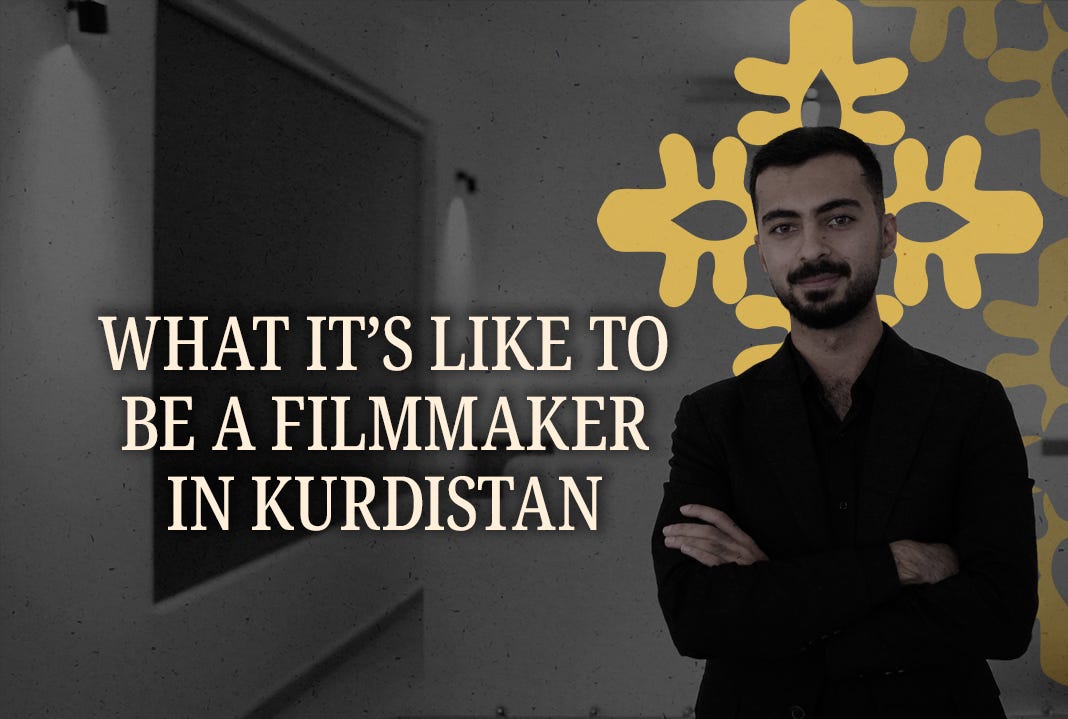
When Ranja Ali left school aged 17, freelancing was tantamount to unemployment in the Kurdistan Region of Iraq (KRI). At best, “people thought it meant volunteering,” says Ali, 25. As a freelance filmmaker in the southern Kurdish city of Sulaymaniyah, he was familiar with the obstacles this mindset presented, particularly when it came to raising funds for his film projects.
After shooting movies on shoestring budgets despite winning awards for his work, he decided to press pause on his passion for filmmaking and focus on improving the working environment for young people in Kurdistan. “People say, ‘Why don’t you go abroad?’ but I don’t want to leave. I want to give other people a reason to stay and invest their skills in developing Kurdistan,” he says.
His start-up, Wedonet, set out to create a market for freelancers and provide Kurdish and Iraqi talent with a platform to craft fulfilling careers on their own terms. Launched in 2022 with a handful of subscribers from Ali’s personal network, it has grown into a national platform that connects local and international clients to a pool of 400 self-employed people.
In three years, “We have changed the culture around freelancing, and the life stories of many people,” says Ali.
Unemployment among young people has reached critical levels in the KRI, with over one-third of young job-seekers unable to find work. The situation is reflected across Iraq, which has one of the highest youth unemployment rates in the region.
Scarce opportunities in the country’s underdeveloped private sector and a bloated public sector have led to despair among young graduates who struggle to secure employment.
In 2019, frustration boiled over when a group of students began protesting outside the Prime Minister’s office. They were met with heavy repression from security forces, triggering Iraq’s Tishreen Movement, which became the largest social movement since 2003 and forced the resignation of Prime Minister Adil Abdul-Mahdi.
Ali was 19 at the time, struggling to make ends meet as a filmmaker. Having left school early because he found the Kurdish education system outdated and “boring”, Ali was looking for opportunities to pursue his passion for film.
Sulaymaniyah is considered the cultural capital of Kurdistan and a hub for artists, writers, and other creatives, but entry-level jobs in his industry were nonexistent. So Ali badgered his family to buy his first camera and learned through YouTube videos before volunteering on film projects and offering his services for free.
Gradually, he built up his technical skill and was rewarded with recognition when his short film Stowe Vermon won Best Experimental International Short Film at the Scout Film Festival in Boston, USA. The barriers he confronted at home suddenly seemed surmountable. “It was motivating to realize that someone, somewhere, was appreciating my movie.”
Ali spent just $75, working with a team of 10 volunteers to make his short film A Piece of Land, which maps the experience of a man from Rojava displaced by ISIS. Ali wanted to evoke sympathy for the plight of refugees amid a hardening of attitudes as the war dragged on. “I couldn’t fight like the Peshmerga, I wasn’t a doctor, but I realized that with my movies I could help by evoking emotional support,” he says.
Many of his contemporaries, though, were less fortunate. Other people his age bemoaned the lack of opportunities to cultivate creative talents in a country where jobs were already scarce for young people. Many, like Ali’s friend Mohammed, resorted to working long hours in poorly paid jobs.
A talented photographer, Mohammed was working as a motorbike delivery driver when Ali set up Wedonet. As word of the platform spread, he contacted Ali to ask about photography work. “I pushed him to create a portfolio, and in less than a month, he secured a long-term project in a government office in Erbil. Now he is one of the top-five videographers in Kurdistan,” Ali says.
The success stories quickly built up. One freelancer on the platform fulfilled their desire to travel with a three-month commission in Thailand, while a young student was able to give up long hours as a cook and pay her student fees by establishing one of the leading content creation companies in Kurdistan.
“Wedonet is not just a business. It is changing people’s lives, including mine,” Ali says.
His first trip abroad to Poland for a film festival crystallized this vision. Meeting people from all over the world in Poland reinforced his belief that creatives make their own opportunities. “I suddenly saw what was possible.” Returning to Kurdistan, he enrolled in several accelerator and incubator programs to hone his business skills before founding Wedonet in 2022.
There were barriers—launching a start-up in the KRI is not easy, and Ali’s platform challenged the traditional work culture in Kurdistan. But it also identified a glaring market gap for a reliable portal that connects young talent with work opportunities at home and abroad. “I made clients trust freelancers,” he says.
In three years, the company has delivered more than 260 projects, including filming a recent documentary for Al Jazeera and providing media for the Board of Investment (BIP) Summit in 2025. It has quickly become the leading freelance platform in the KRI, Ali says, managing projects for clients with diverse skill sets ranging from video and photo production, content creation and direction, to sales, marketing, and app development.
Ali can do many of the jobs that come in himself, but he outsources everything to others. “I want to focus on growing the business,” he says.
Eventually, he hopes to return to filmmaking and use the proceeds from Wedonet to fund features that showcase Kurdish culture. But for now, all profit goes back into the business, which is transforming the landscape for freelancers in Kurdistan and Iraq. “Even if you live in a village, you can work,” Ali says. “We’re giving talented people a reason to stay in Kurdistan.”
Middle East Uncovered is powered by Ideas Beyond Borders. The views expressed in Middle East Uncovered are those of the authors and do not necessarily reflect the views of Ideas Beyond Borders.