


“What It’s Like To Be” takes readers inside the lives of people working in remarkable and often demanding professions across the Middle East. Each installment offers an intimate look at the realities shaping their daily world. Look for WILTB in your inbox every Sunday morning.
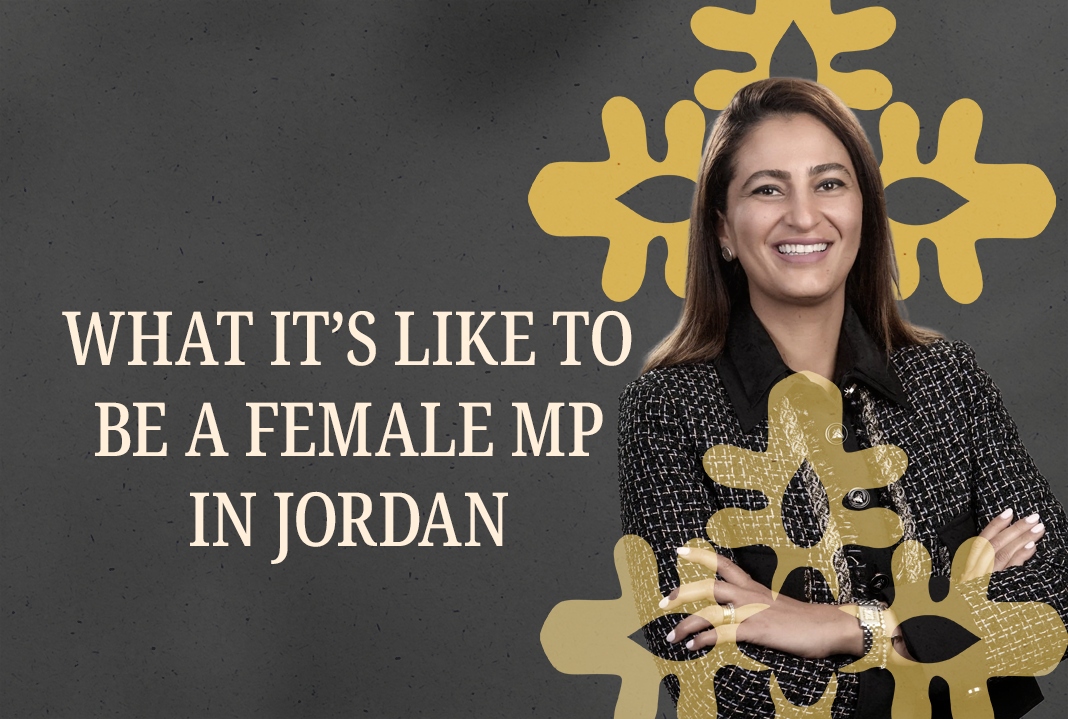
Before her first day as a Member of Parliament (MP) in 2020, Dina Bashir did a practice run. She drove to the Jordanian Parliament building and stood alone in its vast halls, wondering what this new chapter would bring.
“The moment the doors opened and I saw the dome, I felt a mix of emotions—I was anxious, overwhelmed, and deeply moved all at once,” Bashir said.
Days later, watching King Abdullah II bin Al-Hussein make a formal entrance, the gravity of her new role hit her. “It felt surreal—like stepping into a scene I had watched on TV for years,” she said.
At 35 and new to politics, Bashir would be one of the youngest women to serve in the House of Representatives, Jordan’s lower chamber. It was an exciting opportunity, but she was also apprehensive. “You know your life is never going to be the same,” she said.
Only 15 women had been elected to the 130-seat parliament, five fewer than in the previous 2016 election, which was hailed as a breakthrough for female representation in Jordan.
But in 2020, voter turnout was down, and the mood was marred by the COVID-19 pandemic. As the country struggled to balance its debt-ridden economy, Bashir realized that before she could make an impact, there was a familiar hurdle to overcome.
Male MPs in Jordan benefit from established networks that make Parliament easier to navigate, while women are often treated as outsiders. Bashir, fresh from the private sector and expecting to be taken seriously, soon realized it would take time. “Every day you need to prove that women are capable of performing this role,” she said.
Prior to taking office, she worked at one of the country’s most prestigious law firms after completing her studies at the University of Jordan and University College London.
The pace of private sector life was stimulating, but interpreting Jordanian law had its limits. When she was invited to run for office, she saw an opportunity to engineer real legal change.
Jordan was embarking on a period of reform, buoyed by years of advocacy from a growing women’s rights movement. Bashir was already part of it.
When the results came in on election night, she felt a surge of satisfaction. After years of deciphering legal texts, she could finally use the law to change women’s lives. “You feel joy because you have gained the trust of so many people,” she said.
Then came a reality check as she adjusted to the dynamics of a male-dominated parliament. “You realize it’s not going to be as easy as you thought,” she added.
For female MPs in Jordan, securing a seat in Parliament is only half the struggle. The quota guarantees a minimum of 18 seats for women, but critics say this system privileges gender over ability and can marginalize female MPs as a result.
Others counter that quotas, first introduced in 2003, are necessary to break cultural barriers and normalize women’s presence in decision-making spaces.
Jordan’s patriarchal norms have long cast women as unfit for political life. Strict stereotypes reinforcing the role of women as wives and mothers have discouraged many from pursuing careers traditionally dominated by men. However, perceptions are gradually shifting as women become more visible in public life.
Recent reforms have improved access for female candidates, who won almost 20 percent of seats in the 2024 election, up from 14 percent. The 2022 Political Parties Law requires at least 20 percent of a party’s founding members to be women, and a 2021 reform increased women’s representation in local councils to a minimum of 25 percent.
Despite these gains, women remain under-represented in all areas of political life.
“Female politicians in Jordan often face a persistent stereotype claiming their success is primarily due to the women’s quota, and that their political influence is limited in scope,” Bashir said.
“Quotas alone are not enough. They must be complemented by real work on the ground—economic empowerment, political training, and sustained engagement with communities,” she added.
Her Parliamentary position enables her to serve as a bridge between activists and decision-makers, ensuring issues affecting women are heard at the highest levels. “The doors are open, and female voices are heard. There is a lot more support from the system,” she said.
Bashir was among the MPs championing changes to the country’s labor law when it was updated in 2023 to extend maternity leave and lift legal restrictions on the type of jobs open to women. The reforms were a major victory for women’s rights campaigners, but the process also proved to be a learning curve.
“I believed it would be easy to communicate with other MPs and convince them. I was faced with the reality that not all MPs are from the same background or community,” Bashir said. “You need to go outside your bubble and see how others interpret the issue.”
Now in her second term, Bashir has found her voice as a politician. A member of the legal committee in Parliament and chosen to serve as assistant to the Speaker of the House, she has influence and a track record of advocating for change.
She believes the country’s new party system will create a more competitive environment and encourage strong female candidates to step forward.
“There are struggles we need to figure out, including economic stability for women and changing cultural stereotypes, but we have managed to guarantee that women are represented in a decent way in Parliament,” she said.
At times, her work requires a thick skin, particularly when navigating sexist remarks on social media. But she takes her job as a role model for other women seriously.
“In countries all over the world, women are facing challenges. You need to be strong so others feel motivated and empowered by your success.”
Today, political reforms are laying the foundations for a more progressive path in Jordan. As legal barriers drop away, women are re-framing their role, gradually dismantling the cultural barriers that have excluded them from public life. As more women step into politics, Bashir is confident Jordan can carve out a competitive edge in the region.
“Ultimately, no decision-making table can be complete or credible without women as full partners in shaping the future,” she said.
As Jordan’s political landscape slowly evolves, Dina Bashir’s experience reflects both the progress made and the work still ahead. Her ascent as an influential lawmaker shows that women are no longer asking for a seat at the table, but actively shaping decisions, asserting influence, and reshaping the political space they have worked so hard to occupy.
Middle East Uncovered is powered by Ideas Beyond Borders. The views expressed in Middle East Uncovered are those of the authors and do not necessarily reflect the views of Ideas Beyond Borders.
Well done. The superior gender deserves equal or superior representation. Now.