


“What It’s Like To Be” takes readers inside the lives of people working in remarkable and often demanding professions across the Middle East. Each installment offers an intimate look at the realities shaping their daily world. Look for WILTB in your inbox every Sunday.
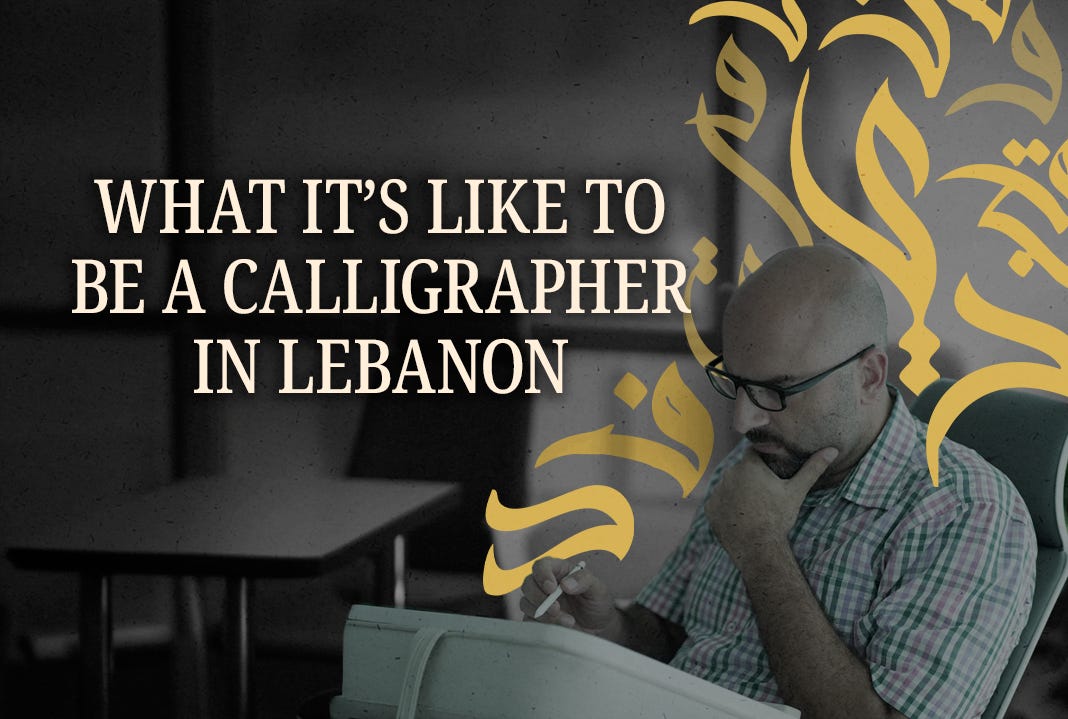
Jihad Mikati knows at a glance when calligraphy is the work of a master. There are subtleties that only another calligrapher could pick out. Time slows as he stands before a perfect piece, lost in the grace of the curves and the clarity of the strokes.
In an era where few people have time for meticulous art forms, these moments are precious. “Calligraphy calls for extreme patience,” Mikati says. “Even older generations don’t have this anymore.”
Cultivating this skill is the work of a lifetime. Mikati has been practicing calligraphy since 2014, when his eye was drawn by the neighboring stand at an art fair in Saudi Arabia.
A digital art professor at the time, he worked with rapidly evolving technologies. The idea of an ancient art form steeped in history held a powerful allure, so he asked to learn the basics.
Those early lessons set him on a path that would come to define his work. “It was like I found the grave of Ali Baba. I wanted to explore this new world,” he says.
There’s a mystical quality to finely-wrought calligraphy that connects the mind to a distant age. For many, it carries a spiritual significance, dating back to the dawn of Islam when the first Kufic scripts emerged.
Developed under the 7th century Umayyad dynasty in Kufa, Iraq, Kufic was the original Qur'anic script before more familiar, cursive forms became commonplace.
The most famous example appears on Islam’s oldest standing monument at the Dome of the Rock in Jerusalem, where Kufic inscriptions from the late-7th century convey the significance of Islamic teachings through the beauty of the written word. For many, it’s enough just to look at Qur'anic calligraphy, which is considered to be a visual expression of the divine message.
Today, very few people can read Kufic, and the ancient art has come close to dying out. But in recent years, early scripts have resurfaced in street art, company logos, and advertising campaigns, as contemporary artists reimagine early styles for the modern age.
Yet even as early Arabic calligraphy enjoys a renaissance, traditional practitioners struggle to find work.
A hundred years ago, Lebanon’s calligraphers were in high demand, called on for shop signs, official documents, invitations, and decorations. These days, only the elite can afford calligraphy commissions. “This kind of job is almost gone. People use computer programs to do the work calligraphers once did,” Mikati says.
Nevertheless, he continues to refine his art, enjoying the creative fulfillment this brings. “I need to do calligraphy. It’s like the urge to hear a favorite song,” he adds. Between work and family life, those moments with his pen offer a sliver of serenity and a connection to one of Lebanon’s oldest traditions.
The Arabic script, which underpins Arabic calligraphy, originated in the Levant and developed into an art form with the advent of Islam. The revelation of the Quran spurred the development of scripts, and the practice flourished as calligraphers codified the proportions and refined distinct styles.
From the 10th century, the bold geometry of Kufic softened into cursive scripts such as thuluth, known for its sweeping curves and ornamental complexity. Often used in mosques and Qur’anic inscriptions, it is also the most difficult script to master.
“The calligrapher who has perfected thuluth is a rare artist,” says Mikati, who specialises in Diwani, Naksh, and Riq’a but practices thuluth when he can.
Over time, more styles emerged as competing dynasties developed unique scripts to spread their message.
Under the Ottomans, a ‘secret’ script called Diwani was used by the imperial court, which closely guarded the rules to protect its prestige as a symbol of the Sultan’s authority.
The development of the first Arabic printing press in 1734 accelerated the dissemination of calligraphic texts across the Ottoman Empire. When it fell, Diwani remained in use and continues to be popular for artistic and decorative purposes.
For a while, it was the only calligraphy script that couldn’t be reproduced by computers, but more recent technological advances are digitizing even the most complex designs.
For Mikati, who specializes in the Diwani script, computers will never replace the human hand when it comes to capturing the precision and power of this florid form.
An accomplished piece of calligraphy must be “neat and precise,” he says, with the right distance between letters, a balanced composition, and clear lines.
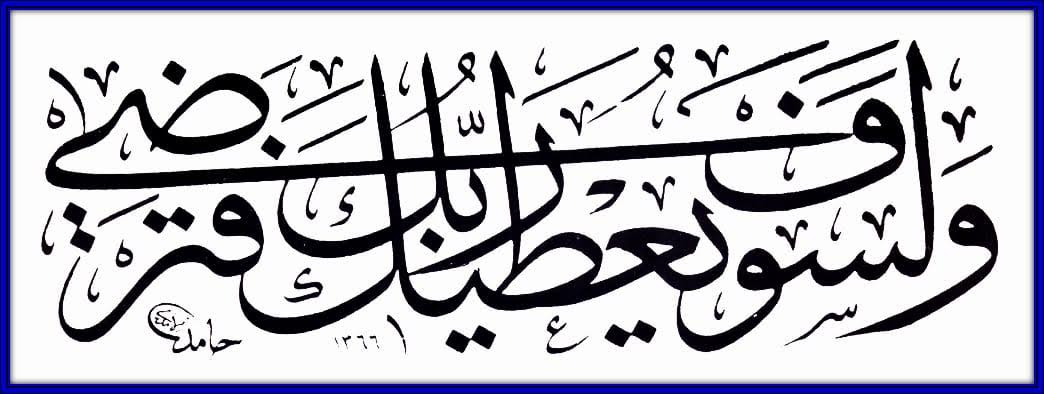
While these requirements are within the reach of modern AI models, “computer programs can’t replace Arabic calligraphers,” when it comes to creativity, he says.
Done well, a piece of calligraphy will possess a distinct rhythm. In some pieces, the letters seem to move, swirling and arching across the page. Achieving this level of accomplishment takes many years, with rigorous training required to achieve a basic level of technical skill before a practitioner can refine their style.
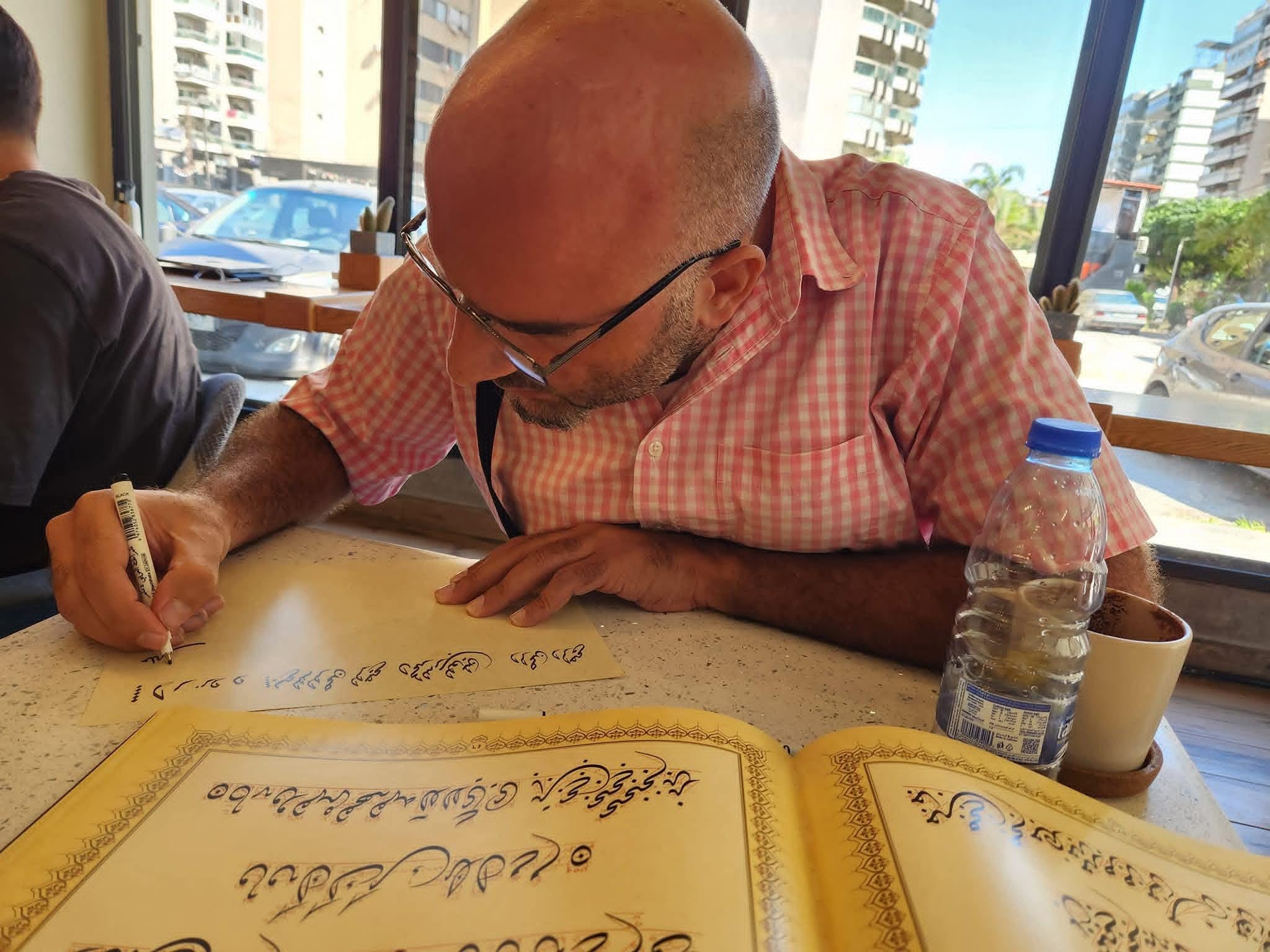
Teaching students, Mikati begins with the traditional tools of the trade, including the Qalam. Made of reed or bamboo, the instrument is carved with a special knife to suit varying styles of script.
Inks are typically made from soot and gum arabic, with pots lined in raw silk to prevent blotting and ensure the qalam glides seamlessly across the page.
It can take a whole year to learn how to hold the pen correctly and develop the muscle memory for smooth, consistent strokes. Only then are students ready to begin learning letters.
“There is no shortcut to Arabic calligraphy. It must be step by step,” Mikati says.
A strict system of proportions governs calligraphy, where specific measurements for each letter ensure aesthetic harmony and a legible flow. In time, a dedicated calligrapher will develop their own style, incorporating artistic touches and a signature flair.
In Beirut, the work of Lebanon’s master calligraphers can be admired at art exhibitions, but in Tripoli, these displays are rare. “We need more focus on the culture of calligraphy in Tripoli,” says Mikati, who believes that Arabic calligraphy should be part of standard art curricula.
“We see it in architecture, books, writing. It’s as important as classical or baroque art,” he says.
In an age propelled by real-time updates and instant messages, spending hours shaping a single word may seem counterintuitive. But for Mikati and those devoted to Arabic calligraphy, there is pleasure in embracing the lost art of slowness. Time, effort, and patience, key ingredients for any artist, are crucial for the calligrapher, who must have “the discipline to craft each line precisely,” he says. This challenge is also what makes calligraphy rewarding, as each stroke demands focus, absorbing the mind in a rich tradition that refuses to be rushed.
Middle East Uncovered is powered by Ideas Beyond Borders. The views expressed in Middle East Uncovered are those of the authors and do not necessarily reflect the views of Ideas Beyond Borders.