


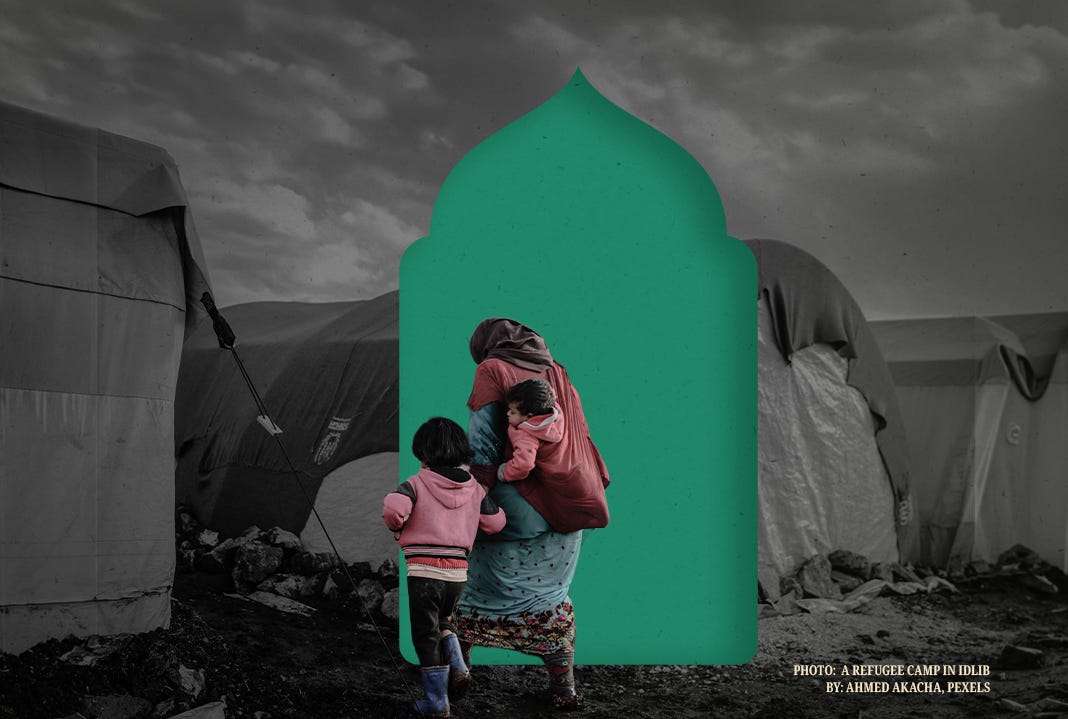
Twelve years ago in August, ISIS fighters surrounded Sinjar in northern Iraq and set out to erase the Yazidis, an ancient religious minority. In its latest count, the Kurdistan Regional Government says 5,000 Yazidis were killed and 6,417 abducted. Of those taken, 3,595 have been rescued. That leaves 2,526 people whose families do not know whether they are alive.
Advocates estimate that about 1,300 of the missing were children when they were seized. A boy taken at eight is a grown man of twenty now, and a tender girl abducted at ten has spent more than half her life in someone else’s house, under conditions that can only amount to unthinkable. Researchers say there is no coordinated, systematic effort to find them, only sporadic rescues. That isn’t a plan; that is a flimsy grapple with hope.
Sadly, no one can say for certain where the missing Yazidis are. Investigators typically point to two possibilities: they are dead, or they were hidden. Some are dead. About 190 mass graves dot Sinjar, and most have never been exhumed.
One grave between Tel Afar and Mosul is said to hold seventy women whom ISIS judged too old to sell. Others may have been killed in coalition airstrikes on ISIS-held ground, and others concealed from reach.
Investigators believe captives were held in Syria, including in camps housing ISIS families, and even across Turkey. Intelligence trackers have told me that ISIS families forged passports and Arabic names, scattering abductees across the Middle East and North Africa. A child given a new name, a new language, and a heavy dose of indoctrination is very hard to find.
The cruelest possibility is that some of the missing no longer think of themselves as missing. ISIS took Yazidi boys to turn them into fighters. It gave them new names, drilled in them a new faith and, in some cases, erased even their native language, Kurmanji. A child abducted at eight is now twenty, having spent more than half his life under indoctrination and grown accustomed to a life he may not want to leave.
When I met Captain Khatoon Khider of the all-women Sun Ladies battalion eleven years ago, she was still waiting for her people to come home. She told me what frightened her most.
“We now have terrorist Yazidis, something that never used to be,” she tells me, her voice heavy.
These are children who were taken apart and rebuilt by their captors. By the time anyone comes looking, the boy in question may be a grown man who does not want to be found. Or he may not be alive to be found. Iraq hanged ten people on terrorism charges in just one week in September, and under its anti-terrorism law the offense carries the death penalty whether or not the defendant ever fired a weapon. A Yazidi boy conscripted at six and arrested at eighteen could face that same courtroom.
Women are no different. Investigative Judge al-Hussein Chfat al-Tameemi, who handles ISIS trials in Baghdad, tells me of survivors who beg authorities not to arrest their captors, even after watching those men murder their parents. Some Yazidis, once reunited with relatives in Sinjar, have fled back to ISIS-held areas, unable to live apart from the children they bore in slavery.
Rescue is not the end of the story, and that is part of why the search has gone quiet. Yazidi doctrine requires both parents to be Yazidi. Religious leaders broke with tradition and welcomed survivors home as victims, but their children by ISIS fighters are not welcome.
“The families accept the survivors, but only if they return without children,” Wansa Shamoon, a communications officer for the Coalition for Just Reparations, tells me. Some women are pressured into abortions, even in the final weeks of pregnancy. Others stay in captivity to keep their babies.
The top Yazidi spiritual leader, Baba Sheik, did not soften it.
“Our religion does not accept children unless both parents are Yazidi,” he said. “That is our law and our shame.”
Under Iraqi law, a child takes the father’s religion, which here means Islam. Yazidi mothers refuse to register their children as Muslim, so the children have no legal identity. They cannot enroll in school or see a doctor. Inside the camps, other children call them “ISIS kids.”
Imagine being a mother in that position, weighing a return home against a child she cannot bring with her. Now imagine the families who know all this and still wait by the phone.
There is some justice, even if it pales in comparison to the scale of the crimes.
France convicted a former ISIS member of crimes against Yazidi women and children this March, in absentia, and at least 18 more French nationals are under investigation. Germany was the first country to convict ISIS members of genocide against the Yazidis. Yet, the vast majority of perpetrators in Iraq have been prosecuted only under terrorism laws, not for genocide, so the crimes against the Yazidis have never been formally acknowledged in court.
Still, none of this brings anyone home. Years ago in Duhok, a survivor named Zana asked whether telling her story would make a difference.
“Yes,” I lied. I told her that because I could not bear to say what I knew, which is that atrocities do not stop because we documented the last one.
Zana’s sisters are still missing. So is the daughter of a man named Murad, whom I met in a crumbling home near Lalish, the holiest site in the Yazidi faith. ISIS held his daughter for two years. When I met her, she could not speak or sit up, and she lay folded into a fetal ball on the floor. “Her mind has gone somewhere else,” her father said, his eyes cast down.
Another anniversary statement will not move the needle. Each year, fewer cameras show up at the commemorations, fewer governments ask about the missing, and the plight of the Yazidis ever so slowly fades from our consciousness.
The window is closing. Witnesses age, memories fade, and the children who can still be found grow older and harder to identify. Rescuing them needs what the missing have always lacked: an organized, funded, international search with the same urgency we would bring to any other hostage crisis.
“The world has forgotten us,” an elderly Yazidi woman told me on a recent trip, her voice barely a whisper.
Middle East Uncovered is powered by Ideas Beyond Borders. The views expressed in Middle East Uncovered are those of the authors and do not necessarily reflect the views of Ideas Beyond Borders.