


Not long ago, Afghanistan was animated by open discussion, collaboration, and a shared sense of dignity. Thousands of young people gathered in newly formed spaces to exchange ideas, challenge one another, and imagine different futures. These everyday freedoms helped many discover purpose and direction, while also forging relationships that grew into lasting alliances and partnerships. Across the country, new organizations emerged, creating rare and meaningful opportunities for Afghan youth to connect with one another and the wider world.
Since the Taliban took control in 2021, much of that public life has diminished. Large numbers of Afghans, particularly young people, have left the country in successive waves of migration. But many activists, innovators, and community leaders remain inside Afghanistan, continuing their work under increasingly restrictive conditions.
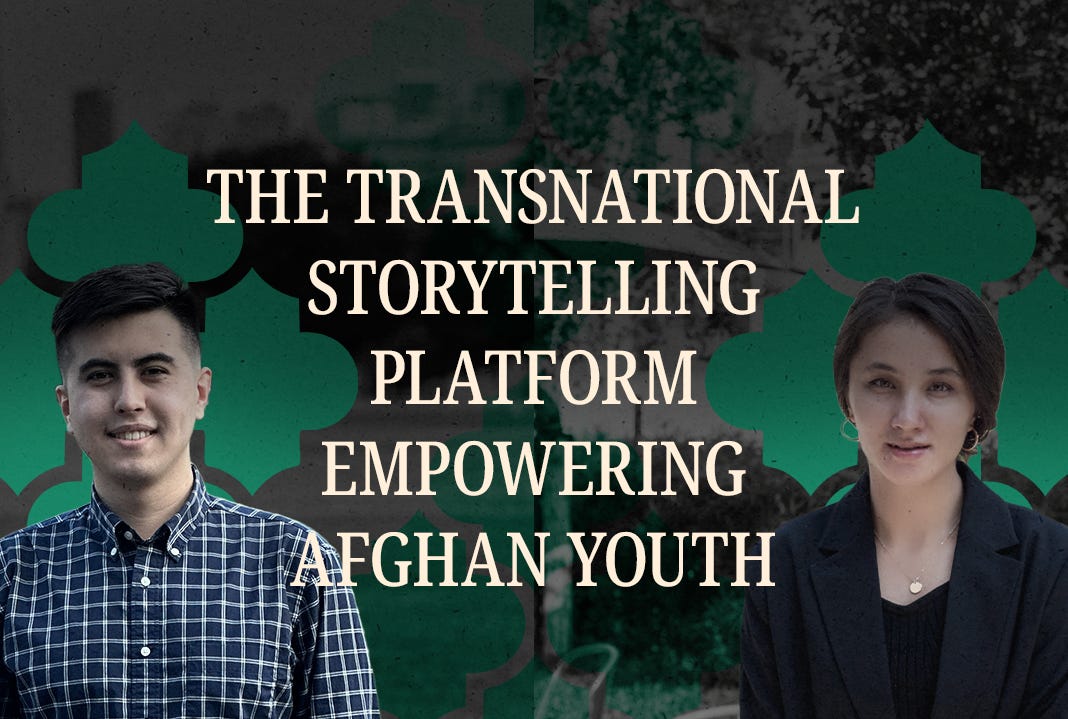
Zakira Bakhshi, a 22-year-old Yale University student, launched A Thousand Voices in response to these constraints. Developed through the Project for Peace and the Thomas C. Barry Fellowship, the initiative is a global short-story competition and anthology featuring stories by Afghan youth. She hopes to amplify the lived experiences, dreams, and perseverance of young Afghans—written by them, in their own words.
Bakhshi, while acknowledging the hard work of non-Afghan writers and their significant contributions to the country’s literature, emphasized the need for Afghans to speak for themselves. To further encourage participation, she announced prizes of $1,500, $1,000, and $500 for the top three stories. Afghan youth aged 16-34 were eligible to submit short stories—fiction or non-fiction—focused on identity, resilience, and home. Submissions may also include artwork, poems, short novels, and other original works for consideration in both English and Afghanistan’s national languages. She expects the anthology to feature 80-100 selected stories.
Bakhsi, originally from Ghazni province, was born in Afghanistan but spent much of her early life in Pakistan as a refugee. She occasionally visited Afghanistan before returning to Mazar-e-Sharif with her family in 2015. As a returnee, she faced challenges but credits her participation in programs such as the Leadership Advancement Program (LEAP) with broadening her horizons and increasing her involvement in advocacy and social leadership.
Originally, Bakhsi planned to travel to Afghan refugee hubs around the world, including Iran, Pakistan, Turkey, Germany, the US, Canada, and Australia, to conduct outreach for the program. However, following the June 2025 travel restrictions imposed on all Afghan nationals, she was forced to stay in the US and seek an alternative. “We established a team of global ambassadors across the world and in different places, including universities,” Said Bakhsi. “These ambassadors, along with our strategic partnerships with more than 30 institutions, helped us reach thousands of Afghan youth.”
In the first round, A Thousand Voices received more than 800 submissions from around the world, with approximately 80% from within Afghanistan.
While the first round of submissions attracted a large number of pieces from within the country, Zakira hoped to target the diaspora community this time. She believes that the stories of Afghans both inside and outside the country need to be documented, organized, and published. To do this, a pre-selection committee will review the pool. Generative AI-written content or any unpublishable material will be filtered out, and the rest will be prepared for the selection committee. “The selection committee is composed of English language professors, journalists, professionals, and people who have had a good exposure to this line of work,” said Zakira, referring to the merits of her project. “It’s up to the selection committee to decide which stories, essays, poems, and art will make it to the final list.” This committee is also responsible for selecting the 1st, 2nd, and 3rd-place winners of this challenge. But only after a round of interviews with the finalists to verify their authenticity, originality, and enthusiasm.
Bakhshi, studying political science and environmental studies, has long been passionate about social change and politics. She participated in the influential Pamir Model United Nations (PMUN), which inspired and empowered Afghan youth during its years of operation.
One such participant was Sajad Amini, a 22-year-old at the University of Toronto. Zakira and Sajad met at the PMUN in 2019, shortly after both returned to Afghanistan from abroad. Their shared hopes and ambitions at PMUN reflect the optimism that once existed among Afghan youth.
“Challenging the current narratives of Afghanistan is very important for us,” says Amini, “we hope that more associations and Afghan youth groups participate in this initiative.”
When asked about her time in Afghanistan, Bakhshi recalled, “We were optimistic about the future, back then there was this smell of democracy and a feeling of hope among the youth.” She argues that the country’s rising generation bore one of the heaviest burdens following the Taliban’s takeover, seeing their aspirations abruptly undone.
“As soon as you tell someone you are from Afghanistan, they are either afraid of you or pity you,” she added, believing that this book might be able to challenge that perspective. She is not alone in this journey; her past alliances have proved fruitful even after all these years.
Amini, now a political science student in Canada, noticed Bakhshi’s post about A Thousand Voices and reconnected to help. He organized a workshop through the Afghan Students Association at the University of Toronto to encourage submissions from diaspora youth. This event enabled students to craft and submit their stories. Amini aims to expand outreach efforts across North America.
When asked about next steps, Bakhshi presented the project timeline and projected outcomes. “Once we close all submissions by the end of December, we will start evaluating them,” she said, “while we simultaneously work on our proposals to publishers and editors.” Results are expected to be announced between mid-February and late March. Bakhshi, working with her professors, will pitch this compilation to publishers in hopes that someone notices the value of such a curation. The painstaking collaboration among Afghan youth across multiple time zones, solely to document and publish their voices, is both a tremendous achievement and an enduring legacy.
Some submissions are anonymous, with over 60% coming from girls determined to speak out against ongoing injustices. Afghanistan remains the only country where secondary education for women is banned solely based on gender, and Afghan women continue to endure immense hardship, with limited access to the internet and smartphones. Each submission is vital, as the number of Afghans able to express themselves openly is very limited.
A Thousand Voices cannot represent or capture the feelings and emotions of all Afghan youth. However, it can elevate the vast majority who are tired of war and the systems that have no respect for human dignity. They are exhausted by their representation on international stages by former politicians, whose track records are tainted and infamous in Afghanistan and beyond. Politicians who, despite their outdated approaches and ideas, still take the front seat at international conferences and assemblies, pretending to represent youth or their interests.
For Bakhshi, the journey has just begun. She wishes to register A Thousand Voices in the US as a non-profit. “Perhaps our work will be noticed in the media and find patrons,” she hoped, “maybe in the future we can allow Afghan girls to publish their own books rather than just 3000-word essays.”
She also hopes to use the proceeds from this book, or from future donations, to establish a scholarship fund to support women’s online education in Afghanistan. This will ensure that, with every dollar spent on the book, someone in Afghanistan can enjoy the thrill of attending class, even if it is on a screen.
August 15, 2021, tried to halt the mental, emotional, educational, and personal development of millions of young Afghans and limit them to Islamic Studies and indoctrination. The Taliban might have succeeded in establishing control over how people move and interact in Afghanistan, but they can never limit how people can think. As long as the Taliban believes that draconian, medieval, and misogynistic methods are the best way to run a country, then there will be a constant supply of young people turning away from them.
A Thousand Voices is reclaiming one of the few freedoms that cannot be regulated: the ability to tell one’s own story. By connecting Afghan youth across borders and circumstances, the project challenges global perceptions too often shaped without the input of those who live the reality of Afghanistan every day. These stories do not ask for sympathy or saviors; they assert humanity, complexity, and dignity. Long after policies shift and regimes change, they will endure as testimony to a generation determined to speak for itself.
Middle East Uncovered is powered by Ideas Beyond Borders. The views expressed in Middle East Uncovered are those of the authors and do not necessarily reflect the views of Ideas Beyond Borders.
