


On Friday, Israeli Prime Minister Benjamin Netanyahu announced that his country had recognized Somaliland as an independent state, making Israel the first country to do so. The move was quickly condemned by Somalia, Egypt, the Arab League, the Gulf Cooperation Council (GCC), Turkey, the African Union (AU), and Djibouti. The AU and Djibouti both expressed concern that recognizing Somaliland could encourage other separatist movements in the region, potentially destabilizing the Horn of Africa. The Arab League and GCC members framed the move as “undermining pan-Arab solidarity.”
Somaliland is a self-governing territory in the Horn of Africa that has functioned as a de facto state since 1991, following the collapse of Somalia’s central government. Formerly the British Somaliland Protectorate, it declared independence after the civil war that ousted Somali dictator Siad Barre and has since maintained relative stability in contrast to much of southern Somalia. Despite operating its own government, holding regular elections, and exercising control over its territory, Somaliland has remained internationally unrecognized for more than three decades, with most states formally treating it as part of Somalia.
It meets many of the classic legal requirements for statehood, most notably those outlined in the Montevideo Convention (1933), which lists four criteria:
A permanent population of around 5 million people who live in and identify with the entity. The population is predominantly from the Isaaq clan and other smaller clans, unlike Somalia’s multi-clan composition.
A defined territory corresponding to the former British Somaliland Protectorate; the claim is therefore based on restoring a pre-existing border rather than creating a new one.
An effective government: Somaliland has maintained a stable and functioning government since 1991, with regular (and relatively credible) elections, the most recent of which was held in 2024.
A capacity to conduct foreign relations. This may be the weakest point, as the country maintains mostly informal relations with several states, including Ethiopia and the UAE. It maintains representative offices in countries such as the United Kingdom and Taiwan but lacks formal diplomatic recognition.
Beyond meeting the legal requirements for statehood, Somaliland has long sought international recognition, using its political stability and governance record to attract diplomatic and economic partners. It has pursued foreign investment, infrastructure projects, and regional trade partnerships, most notably with Ethiopia. This proactive diplomatic approach reflects the country’s long-term interest in gaining international legitimacy.
Israel’s recognition of Somaliland is not unprecedented, as some assume. Israel was among the countries that recognized Somaliland’s independence in 1960 for a brief five-day period before it merged into Somalia, and Israeli officials have since indicated a willingness to recognize Somaliland again if approached.
Why did Israel decide to take such a step now? One short answer may be the Abraham Accords. Somaliland’s president, Abdirahman Mohamed Abdullahi, stated after the recognition that Somaliland is willing to join the Abraham Accords. Israeli Foreign Minister Gideon Saar said, “Somaliland was not created this weekend. It has existed as a functioning state for over 34 years. The attacks on Israel’s recognition of Somaliland are hypocritical. Israel alone will decide whom it recognizes and with whom it maintains diplomatic relations.”
U.S. President Donald Trump stated that U.S. recognition of Somaliland is under “study.” This response may reflect his concerns and interests regarding Gulf countries, Egypt, and Turkey, all of which oppose recognition of the Muslim-majority Somaliland.
The Abraham Accords do not require full UN recognition; participation is political and contingent on recognition of Israel and U.S. sponsorship, rather than on international legal status. Somaliland’s leadership has sought to leverage Israel’s recognition to secure broader international legitimacy, though formal inclusion remains uncertain.
The recognition also carries strategic implications for Israel’s maritime security. A second explanation is Israel’s interest in gaining a new ally near the Red Sea. Somaliland sits on the Gulf of Aden, south of the Bab el-Mandeb Strait—one of the world’s most important maritime chokepoints—and is home to the Berbera Port, a crucial hub not only for Somaliland but also for regional trade, particularly for landlocked Ethiopia. After nearly two years of shipping crises and instability in the region, caused by Iranian proxy Houthi attacks on vessels, Israel has been uniquely vulnerable due to its single Red Sea outlet at the port of Eilat. Eilat exists almost entirely because of Red Sea trade, and once that route became unsafe, port activity was severely disrupted.
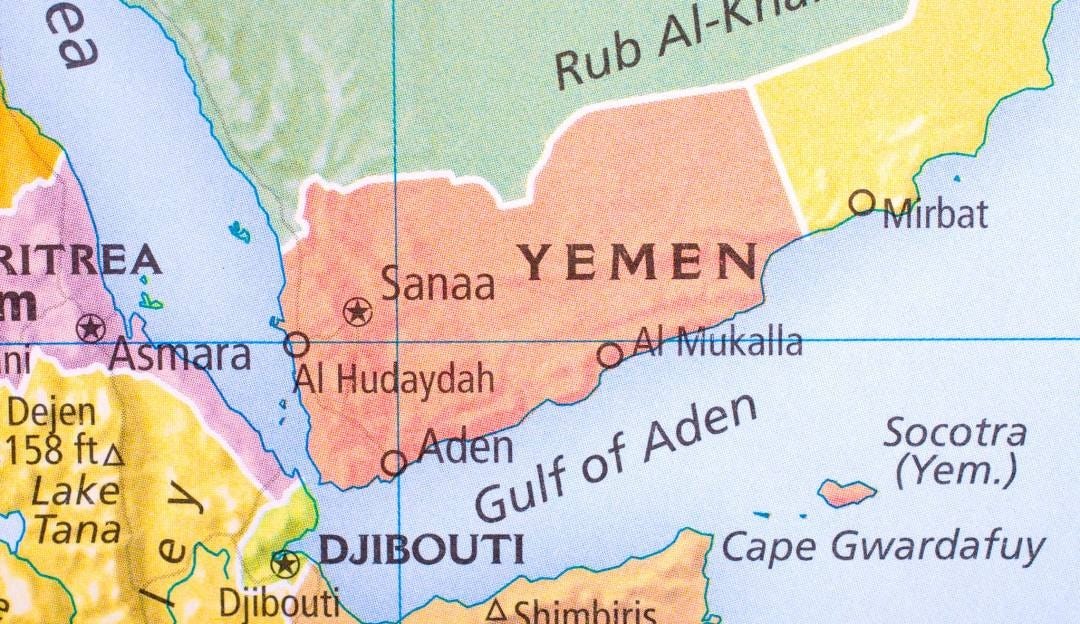
For Israel, an alliance with Somaliland provides strategic space to monitor and respond to threats in the Red Sea. For Somaliland, closer and official ties with Israel could attract foreign investment, technical support for port operations, and cooperation in cybersecurity and agriculture. This relationship illustrates how smaller, unrecognized states can leverage strategic geography to gain international partners.
Another, less likely, explanation for the move may relate to the relocation of Gazans. Several reports in recent months have suggested that the U.S. and Israel examined the possibility of relocating Gazans to Somalia and Somaliland. Both Somalia’s and Somaliland’s foreign ministers denied that their countries were involved in such discussions, rendering the claim highly speculative.
Israel’s recognition of Somaliland won’t redraw borders overnight. However, it signals a broader shift: in a region where maritime trade routes and strategic chokepoints are increasingly central, recognition can be used as a tool of influence and alliance-building. Somaliland gains legitimacy and visibility, while Israel secures a foothold near the Red Sea. How other regional and global actors respond will determine whether this move sets a precedent or remains an isolated case.
Middle East Uncovered is powered by Ideas Beyond Borders. The views expressed in Middle East Uncovered are those of the authors and do not necessarily reflect the views of Ideas Beyond Borders.
