


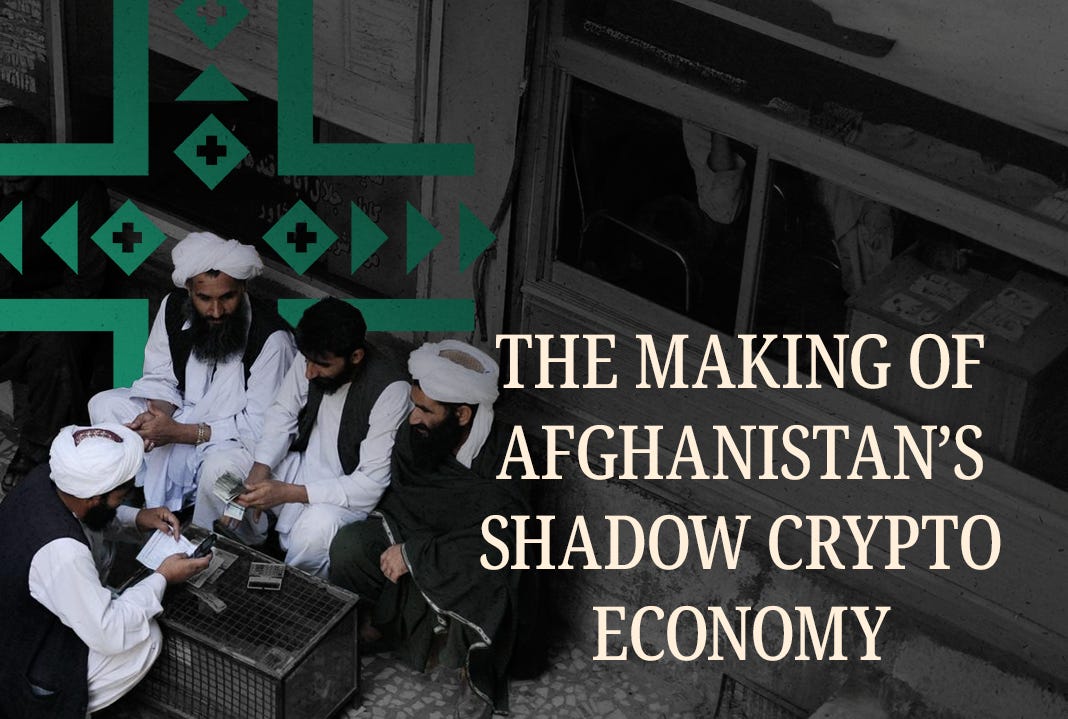
KABUL, Afghanistan — Siyar was visibly anxious and sweating as he closed the doors behind a man in his 30s who had just walked into his small shop in a Kabul luxury shopping center. The man was not alone; he was accompanied by four members of the Presidential Protection Services (PPS). Their job was to protect the president of Afghanistan, the Arg Palace, and other high-ranking government officials serving President Ashraf Ghani. Siyar locked the door behind him as the man took a seat in the chair next to him.
In the room was also an errand boy sent by one of the money exchange giants, Sarai Shahzada, to collect a package from Siyar while the transaction was being completed. Behind closed doors, the man who will be referred to as Nazif, took out three hundred thousand dollars in fresh banknotes from a black plastic bag. “I have never seen that much money in front of me at once in my whole life,” said Siyar as he started counting the new banknotes in his cash machine. “I remember I counted it 13 times that day just to make sure they were real and that we didn’t do anything wrong,” said Siyar.
The man’s identity was irrelevant beyond this point. He paid Siyar three hundred thousand dollars in exchange for his transferring the equivalent amount in USDT (a stablecoin called Tether) into his Binance wallet. In exchange, Siyar would take 2-3% of the total amount as a commission for his hard work, while the errand boy collected the cash and safely transferred it to the money exchange in Sarai Shahzada. Meanwhile, no one in Siyar’s network had the capacity to provide $300,000 in Tether so quickly. It had to come through one of their contacts in Iran—a money exchanger based in Tehran with connections in Dubai who could facilitate a transaction that big.
Siyar exchanged $300,000 USD for Tether on Nazif's behalf for 28 consecutive days in mid-2021, just a couple of days shy of the August 15th Taliban takeover of Afghanistan—a fact corroborated by the exchange agent in Tehran and the money exchange in Kabul. They refused to comment further. In total, Siyar converted 8.4 million USD into USDT and transferred it to a private Binance account, earning around $200,000 in commission from this transaction alone. On the 29th day, Siyar stopped receiving calls from Nazif; the phone was dead, and he was never heard of again. A couple of weeks later, Kabul fell, and Siyar temporarily shuttered his crypto exchange there.
Although this occurred in early 2021, Siyar’s journey began much earlier. While still in high school, Siyar, now 23, was introduced to cryptocurrencies by his friends. “We were chatting during breaktime one day, and one of my friends mentioned Bitcoin,” adding, “I was intrigued by what he said but did not know what it was or what blockchain referred to.” Siyar, who comes from a wealthy business family, was intrigued by the concept of cryptocurrencies. “I immediately started investigating more, and with more research, I became curious about it.” He added that it was precisely at this point that he discovered IM Mastery Academy, iMarketsLive, and IM Academy, collectively known as “IML Academy.” IML Academy has since been shut down by the state of Nevada and the FTC for defrauding investors of $ 1.8 billion. IML Academy was marketed to young people worldwide, including Siyar, who saw it as a way to make quick money by trading crypto. Siyar purchased a $250 package from IML Academy and began learning the basics of cryptocurrencies and trading. It was a year later that Siyar’s business mind started to kick in.
“During those days, it was tough to get access to cryptocurrencies in Afghanistan,” he said, “The concept was brand new, the digital and monetary infrastructure in Afghanistan did not support it.” Siyar described the process of purchasing cryptocurrencies in Afghanistan in 2017-2019 as a series of transactions that flowed cash through the Hawala network and Payoneer, then converted to crypto in India, only to be sent back to Afghanistan in a “Trust Wallet”—a tiresome, expensive, and somewhat complicated process for the average Afghan to follow. So naturally, Siyar saw an opportunity. He began toying with the idea of what would happen if he provided cryptocurrencies in Afghanistan, peer-to-peer, in exchange for cash. And just like that, the first Afghan human crypto ATM was born in Kabul. Siyar would receive US dollars from customers and pay them in USDT minus a fee.
It wasn’t long after this initial successful idea, which made cryptocurrencies more accessible to the public, that competition started to rise. Even though larger money exchanges adopted it much later, small-scale crypto exchange startups began popping up across the country. It was at this point that Siyar turned to the second most profitable part of cryptocurrencies: trafficking knowledge. IML Academy operated as a Ponzi scheme, which was part of the reason it was shut down. Customers are promised benefits and unrealistic returns or discounts in exchange for introducing more people to the scheme. Siyar initially introduced three people who paid him $150/month solely through this referral. After a year of affiliate marketing through IML Academy, he had referred 12 people, earning a total of $650/month. “As a teenager in high school in Afghanistan, I was living the dream,” he told Middle East Uncovered.
It was at this point that he realized he could either refer people directly to the IML academy and receive a small commission or repackage and sell its content while keeping all its profits for himself. IML had no way to tell whether participants in its online classes were actual customers—a loophole that Siyar found and exploited. Suddenly, he found himself flush with cash, so he started running a pyramid scheme in which referring people to his academy earned them special offers or discounts. Siyar said, “I purchased a course about selling tactics and market psychology from Jordan Belfort, the guy from The Wolf of Wall Street, for $1,100, and it was worth it.” He believes that the course helped him understand how money works and how to get it from people. Since the Afghan economy wouldn’t have allowed the average person to pay $250 for an online course, Siyar undersold the packages for $80.
In just a few months, Siyar and his new partner made $60,000 USD in profits, which they split 50/50. They pooled their money and rented a shop in one of Kabul’s newest business centers. It was at this location that Siyar and his partner met with an official from the presidential palace just a few months later. The shop, with only two working desks, a few chairs, and some drapes, served as a meeting spot. Peer-to-peer transactions from USD to Tether still accounted for the bulk of Siyar’s business. The shop was open daily so he and his team could coordinate online lessons while exchanging money for crypto.
Siyar was struggling with the business due to increased competition in the late 2020s. He was then offered a deal too enticing to refuse. “I had no idea how to provide $300,000 every day,” he said, “I was shocked when he asked me that, but I knew I had to find a way.” The person in Tehran had a large stock of USDT, which allowed him to transfer it to Siyar’s client instantly. At the same time, the Hawala guy, a family friend of Siyar’s, transferred that cash from Afghanistan to Tehran. The system worked, and they made money hand over fist. Siyar, who later traveled to Tehran for a month-long visit, recalls his days there as “lavish” and “extraordinary” thanks to his exchange contact. He gave Siyar the royal treatment for bringing him a customer who gave him a Mercedes-Benz and a luxurious life in Tehran.
Then, in 2021, Afghanistan once again fell into the hands of the Taliban. Despite the regime's return, the country’s crypto market wasn’t significantly affected; in fact, more people adopted it as sanctions crippled conventional banking. However, Afghans, like people in other parts of Asia, fell victim to yet another crypto scam in the summer of 2024. A fake company called Metamax, whose advisory notice was posted by the Philippine SEC in June 2024, orchestrated a Ponzi scheme. Users could choose from 7 package tiers, ranging from $30 to thousands of dollars. The app promised a 2x return on investment in a month, with users only having to watch ads and leave ratings. Habib, a 22-year-old university student, fell for this scam. He said, “I lost $1,000 of my own money when one day Metamax suddenly stopped working, and the website no longer existed.” He further added, “I was devastated, but even then I knew people who sold their cars or jewelry and put it in Metamax.”
The Metamax Ponzi scheme affected more than ten thousand people in Afghanistan alone. Some deposited their life savings in hopes of doubling it and making quick money. The deposits, however, were made in USDT, and the person who provided that currency was none other than Siyar and his partner’s human ATM, now a well-established business that even issues receipts when customers purchase USDT or other currencies.
Today, Siyar has left the company. He moved to Turkey and used his accumulated wealth to buy a shop and an apartment in Istanbul, which he rented out. His business partner, 22-year-old Ahmad in Afghanistan, was left to deal with the aftermath of Metamax’s fallout. People came rushing in with the Taliban asking Ahmad to refund their money. He was not liable for Metamax’s collapse, but the Taliban saw the receipts from his exchange and demanded that he pay for the damages. Ahmad went bankrupt overnight, and the next day, the cryptocurrency ban was enforced heavily in Afghanistan by the Taliban.
Despite multiple attempts by Siyar through his connections in the Da Afghanistan Bank, he couldn’t lobby for the legalization of crypto in Afghanistan again. “The Taliban said crypto is not a physical currency, therefore it is haram.” Siyar further added, “I tried to lobby for a system where they can tax crypto exchanges, but they still refused my offer.”
In Istanbul, he established another academy. He paid out $2,000 USD to social media influencers to boost his content and lessons. It only took one month to enroll 300 students, some of whom paid as much as $400 per package. One of his academy’s students eventually took things into his own hands after he was left unconvinced of his teacher’s abilities and intentions.
Fawad, a 23-year-old trader based in Ankara, Turkey, studied briefly under Siyar, only to find that YouTube lessons from a free channel called Inner Circle Traders (ICT) were more helpful. Ahmad himself grew his portfolio substantially as he prepared to create an academy that teaches trading for its own sake.
His attempt produced 10 rounds of lessons, each with 15 to 20 students. Unlike his predecessors, he charged less and allowed more women to participate, sometimes for free. His package, which typically sold for $150, included market psychology lessons, market analysis, chart reading, and many other crypto technicalities, all taught at such academies. One of the students of his academy, 21-year-old Sharif, told Middle East Uncovered, “I was first studying at another academy called Hoshmand Academy, they charged a lot, and all they did was show us some videos.”
We contacted Hoshmand Academy, posing as interested in these courses, and learned that prices range from $100 to $220 USD. They have a modest social media presence, creating videos that showcase “how to become a millionaire” content.
Since the Metamax incident, crypto exchanges have been outlawed. However, this does not stop the operations of the country's underground crypto market. Sharif is among those still using cryptocurrencies and is making money trading thanks to his mentor, Fawad. “I am not making much money off of working during the day, hence why I turn to forex and trading for a side income,” he told me. “Crypto exchanges just work in secret now that the Taliban has banned it; nothing has changed.”
However, for the thousands of people who rely on cryptocurrencies, life has grown harsher. Among them are organizations that support women and girls’ education in Afghanistan. Cryptocurrencies are vital for safely and anonymously transferring money, bypassing the traditional Hawala system and banks. This allows organizations such as Ideas Beyond Borders, Code to Inspire, the Digital Citizen Fund, and many others to send money to teachers, students, staff, and partners in Afghanistan. Cryptocurrencies such as Bitcoin and USDT play an essential role in financing these operations under one of the world’s harshest regimes.
Siyar, who is now based in Dubai and runs his family business, believes that the Taliban will not back down from their stance against cryptocurrencies. His academy will remain open to newcomers until enough people realize that his methods may not yield results, that markets are unpredictable, and that it takes years to become educated in forex trading. In the meantime, as long as Afghanistan is economically struggling, people will buy into these bogus academies in hopes of high returns in a short time. At the same time, their effectiveness remains in question.
Siyar framed his work as ambition, but its consequences have rippled far beyond his own profits. By turning crypto into a vehicle for get-rich-quick schemes and unregulated exchanges, he helped poison the well for those who depend on digital currency for legitimate, life-saving work. Today, every transaction he helped normalize becomes another reason for authorities to shut down the very channels that allow money to reach Afghan educators, activists, and vulnerable communities. The people who need crypto the most are now paying the price.
Middle East Uncovered is powered by Ideas Beyond Borders. The views expressed in Middle East Uncovered are those of the authors and do not necessarily reflect the views of Ideas Beyond Borders.
