


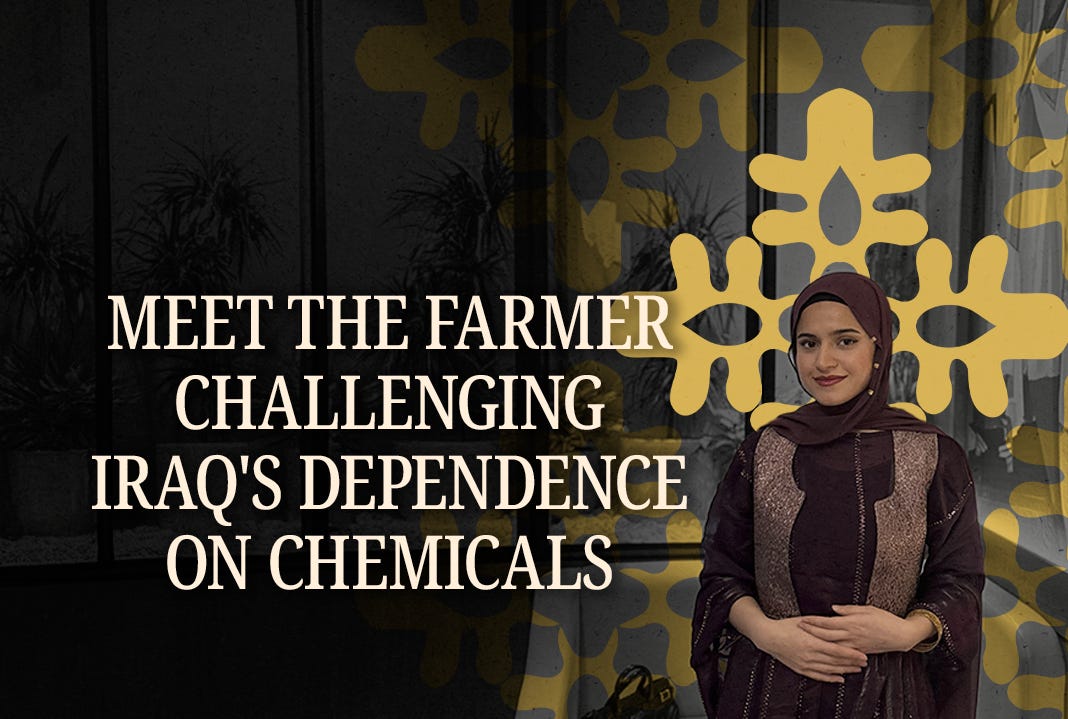
It was a difficult Spring for Kurdish farmer Hin Omar. Freak snowstorms destroyed two of her greenhouses, and soggy soil postponed her planting schedule. Then the US-Israeli war with Iran spread to the Kurdistan Region of Iraq and upended supply chains. Unable to import seeds or export produce, the 27-year-old felt like giving up.
What stopped her was the food security crisis facing Iraq, as escalating regional conflict threatens to deplete local supplies. That, and the rewards of working on the land. “I never wear gloves to handle the soil; I love the feel of getting my hands dirty and being closer to nature,” she says.
Omar still has two greenhouses left, enough to produce a crop of flowers and vegetables for the summer selling season in July. Operating in such an unpredictable environment is a constant challenge for small start-ups like hers, but thoughts of the country’s farming crisis spur her on. “The current situation is a motivation for me to fight and not give up,” she says.
It could also be an opportunity for Omar, who has a small stash of seeds stowed away. After a good year in 2024, her agricultural business has grown, and she now cultivates a range of crops, including aubergines, broccoli, legumes, peppers, cucumbers, and tomatoes, as well as various flower species.
Local sellers like her are critical to Iraq’s food security as rising fuel costs and disrupted supply chains threaten to exacerbate local shortages during the war. Iraq relies heavily on imported vegetables, particularly from Turkey and Iran, which announced a freeze on agricultural exports in early March.
Prior to the conflict, some Iraqi markets were dominated by produce from Iran, a key exporter of vegetables such as tomatoes and cucumbers, as well as fruit including apples, watermelons, and dates. Now local farmers must fill the gap. “Weather, war, I must not stop,” Omar says. “The community needs farmers like me.”
The Iraqi government has placed restrictions on the import of certain fruit and vegetables to bolster local farmers, who already grapple with declining soil quality and severe water shortages. Climate change is reshaping the agricultural sector in Iraq, where drought undermines production and desertification encroaches on once-fertile arable land.
In 2023, the government announced that eight of Iraq’s top ten crops, including vegetables and legumes, were in decline and that the country was no longer able to meet its national food market demand. While the Ministry of Agriculture claims self-sufficiency in 48 products, including tomatoes, potatoes, and lettuce, climate vulnerability poses a major threat to long-term stability.
Omar believes that reducing reliance on chemicals and supporting the soil will improve the outlook for Iraqi agriculture. The government currently subsidizes 50 percent of pesticide and chemical costs, while doing little to promote environmentally friendly farming practices.
Supervising projects on large farms after graduating in agricultural engineering, Omar was shocked by the vast quantities of fertilizers and pesticides plowed into the land. “Farmers don’t realize how terrible these chemicals are. You get a short-term benefit, but after that it makes the soil worse,” she says. “You kill off one pest and leave the crop exposed to different types of insects and disease.”
Organic farming is her ultimate goal, but with few resources to support the shift, Omar has adopted a staggered approach. Each season, she reduces the chemical ratio and increases the percentage of organic fertilizers, using animal manure and composting to nourish her soil.
Sourcing organic pesticides and seeds is difficult in Iraq, but she believes the health benefits will drive demand as consumers taste the difference. A friend’s cancer diagnosis spurred her motivation after the doctor advised a switch to organic fruit and vegetables. “If people want to eat healthily, they have more fruit and veg, but the produce here is often full of harmful chemicals,” Omar says.
One giveaway is appearance. “Sometimes you see vegetables that look shiny and beautiful but taste terrible,” she adds. Omar hopes that word will spread as more people make the connection between health and clean veg, but at the moment uptake is low. “A lot of people just don’t care, but I’m passionate about this change,” she says.
Despite constant uncertainty and worrying about the weather, farming feels more like a vocation than a job for Omar. Agriculture is the second-largest contributor to Iraq’s GDP after oil, but farmers are increasingly being forced to abandon land degraded by climate change. Omar believes organic farming methods are part of the solution. In recent weeks, road closures and security concerns have prevented her from making the 45-minute drive to her farm outside Duhok in northern Iraqi Kurdistan. But when a degree of normality returns, she’ll resume daily visits, aware that the future of the country’s food security rests on small-scale farmers like her persisting against the odds.
Middle East Uncovered is powered by Ideas Beyond Borders. The views expressed in Middle East Uncovered are those of the authors and do not necessarily reflect the views of Ideas Beyond Borders.