


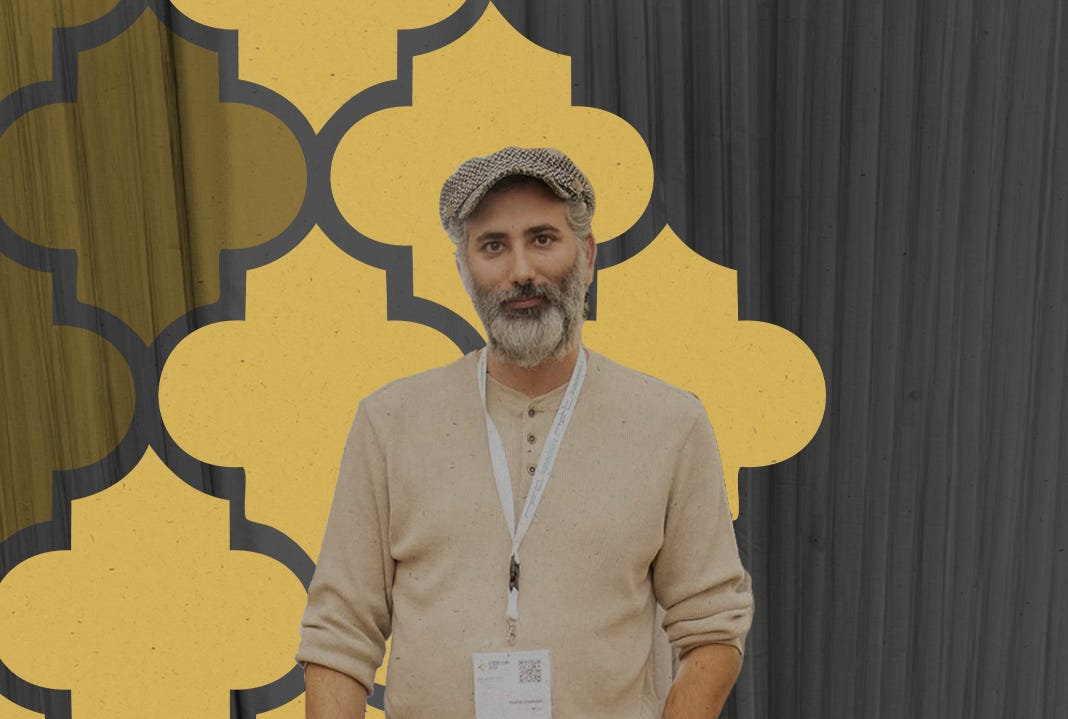
By 8 am, chatter fills the dining room as people swap stories over breakfast at the Medi Convalescence Center in northeast Tunisia. Tucking into a spread of bread, jams, olive oil, cheese, yogurt, eggs, and fruit, the residents of the center fill the room with memories, sharing snapshots of their lives across the decades. Some move with a walking stick or wheelchair, but all share a sense of independence that life at home could no longer offer them. “I gave them autonomy and value. They are living a respectable life,” says Mahdi Oueslati, who owns two care homes for the elderly in Tunisia.
Maison de la Sérénité and Medi Convalescence Center are respectable care homes housing middle-class residents, but many Tunisians would be ashamed to venture inside. In a country where elderly care is traditionally provided within families, paying for these services is viewed with suspicion. “People look at those left in care homes as abandoned by their families,” says Oueslati, whose father accused him of helping people forfeit their duty when he opened his first care home in 2022.
As a physical therapist, Oueslati believes the opposite is true. Visiting the homes of older clients with mobility challenges, he heard about long days spent waiting for relatives to return from work so they could go out or cook a meal.
Oueslati saw a gap in the market for at-home carers and a glaring need for private homes to accommodate an aging population. But first, he would need to confront the stigma surrounding an elderly care model that’s standard in the West but taboo in Tunisia and many other countries across the Middle East. “I started doing videos explaining to others that putting elderly relatives in care homes is not abandonment. What’s abandoning them is leaving them alone while you go to work all day,” Oueslati says.
As in much of the MENA region, Tunisia’s bulging youth population dominates debates over education, jobs and housing, but the country faces an urgent challenge from another segment of the population. People aged over 60 now account for 17 percent of the population, up from 11.4 percent a decade ago.
Declining birth rates and shifting social norms are straining intergenerational care patterns. With life expectancy increasing and fertility declining, Tunisia is undergoing a rapid demographic transition, as the trend towards smaller families leaves fewer relatives at home to support elderly dependents.
Increasing women’s participation in the workforce could boost economic growth, but it also reduces their availability to care for elderly relatives in societies where women typically perform the majority of unpaid care work. As families become smaller and public resources struggle to meet the mounting bill for senior care, demand for alternative arrangements is likely to grow.
In Tunisia, where state-funded care homes are widely viewed as a last resort, Oueslati believes the private sector could widen the choice for retirees and reframe the debate surrounding elderly accommodation. “People are becoming more enlightened and educated about it,” says the 37-year-old, who cites highly trained staff and the availability of one-to-one support among the attractions of the country’s emerging care home sector.
There are currently 15 residents across his two properties, where group activities, including yoga and singing, contribute to the communal atmosphere. While larger facilities risk feeling impersonal, the close-knit environment at these residences resembles a family home with shared meals and group games. Residents often begin with a trial period, but “after a while they all want to live here,” Oueslati says.
European retirees have also been drawn to Tunisia, where the financial benefits and Mediterranean climate present an attractive alternative to more expensive options at home. Oueslati knows several French and German pensioners who have chosen Tunisian care homes. “They receive fantastic care and are treated as one of the family,” he says.
For these European pensioners, the savings can be considerable. All-inclusive monthly rents at The Medi Convalescence Center range from 800 euros a month for a double-occupancy room to 1,200 euros for a single room. Prices are typically higher in Europe, with the average monthly cost of a nursing home stay in Germany running to 3,248 euros.
But for the majority of ordinary Tunisians, the cost of private care homes can still be prohibitive. While entrepreneurs like Oueslati invest in Tunisia’s emerging silver economy and challenge the stigma surrounding paid-for care, they say greater government support is needed to open the sector up to different sections of the market. “European centers receive subsidies, but in Tunisia there’s nothing, which does limit our ability to expand and provide the best care,” he says.
Government policy has instead focused largely on expanding pension coverage and support programs for the most impoverished households. Tunisia has one of the region’s more robust pension systems, with around 75 percent of workers covered by some form of social security pension. However, with people over 65 expected to account for almost one in five Tunisians by 2043, pressure is mounting to expand private provision to meet the needs of a rapidly aging population.
“It’s an untapped market. The competition is still very mild,” says Oueslati, who also founded LR MOVE to provide transport solutions for people with reduced mobility.
Elsewhere in the region, countries like the UAE are already investing heavily in the silver economy. Dubai has so far cushioned demographic pressures through its large expatriate workforce. The city recently launched the Dubai Longevity Authority and offers several senior-friendly policies, including retirement visas and wellness tourism packages targeting older visitors, as it prepares for longer-term population change.
In Morocco, government policies are reshaping care as an economic sector with the capacity to create jobs and boost growth. In July, it became the first Arab country to adopt a national strategy that aims “to transform care from a responsibility borne primarily by families, particularly women, into a shared responsibility,” said Naïma Ben Yahia, Morocco’s Minister of Solidarity, Social Integration and Family.
As evening approaches at The Medi Convalescence Center, the sound of the television drifts over the gentle hum of conversation between residents and staff. These relationships reinforce the debate surrounding private care, showing that it’s not where a person spends their days but the people surrounding them who matter most. For Oueslati, formal care is not a substitute for family, but rather an extension of the support network needed to enable everyone to lead a full life. “I created this kind of family environment for them, and they feel like valued members of society. That’s what I’m most proud of,” he says.
Middle East Uncovered is powered by Ideas Beyond Borders. The views expressed in Middle East Uncovered are those of the authors and do not necessarily reflect the views of Ideas Beyond Borders.