

Iraq’s Dreams of Startup Success Derailed By War
A new generation of Iraqi entrepreneurs had started to build momentum—until war disrupted daily life, halted growth, and forced many into survival mode.

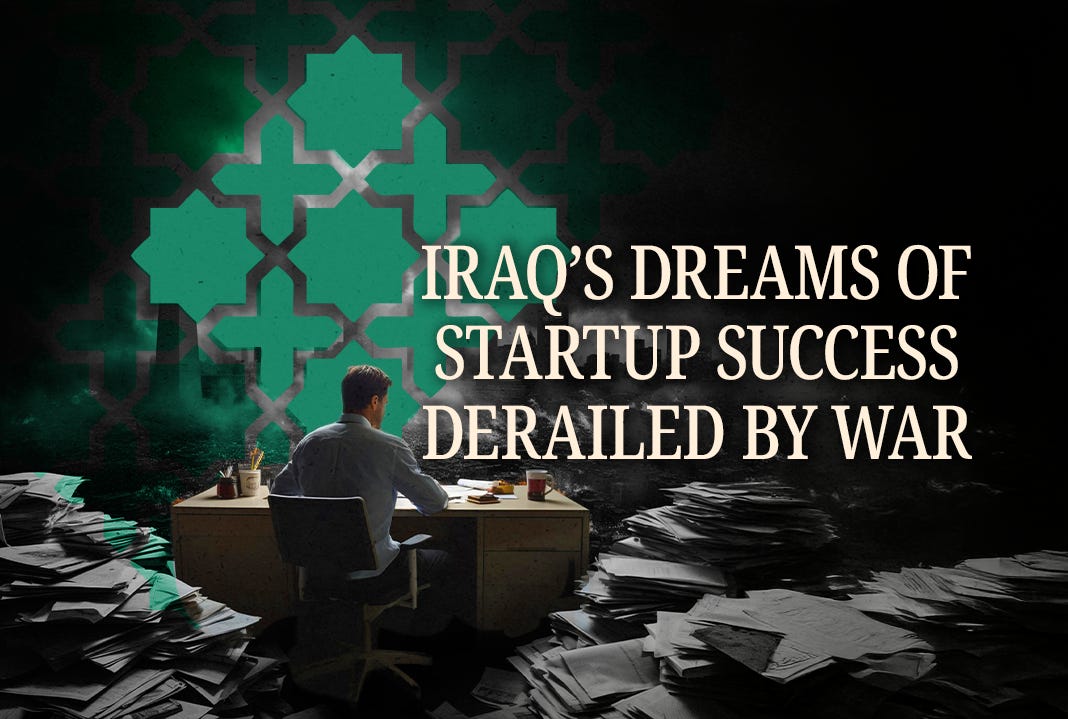
2026 was set to be a good year for Hakam Hesham. His ride-hailing startup, Lygo, secured a $30,000 investment, supporting expansion into two new cities and the launch of a new app on Android and iPhone.
Momentum across the wider market was growing as well. The entry of major global players such as BYD, the world’s leading manufacturer of New Energy Vehicles (NEVs) and power batteries, reflected rising confidence in Iraq’s economy amid an upswing in innovation across different sectors. “Food delivery services have also been expanding, which has positively impacted smaller businesses,” Hesham said.
The startup scene was finally taking off. Despite ongoing economic challenges, new investment funds and entrepreneurial programs had emerged amid a push to diversify the economy, with organizations like Rwanga, Takween, Vim, Orange Corners, and Ideas Beyond Borders supporting aspiring entrepreneurs.
“The entrepreneurial scene in Iraq has been progressing gradually since 2021, witnessing the birth of many startups, especially in tech, and the entrance of a number of regional and international players into Iraq,” says Dr. Mohammed Al Samarrai, Co-founder of QAF Lab, an innovation hub for entrepreneurs in Mosul. “Many investors have been looking into Iraq as the next hub.”
That changed on February 28, when the US and Israel launched airstrikes on Iran and triggered a regional war. Iraq, home to dozens of Iranian-backed militias, quickly became a second front, shattering several years of security progress and returning the country to a conflict zone.
Hopes that tentative economic growth, a construction boom, and rising investor confidence were starting to shape a new Iraq fell flat in the face of familiar frustrations. Across the country, businesses ground to a halt. The closure of airports and shipping routes shuttered supply lines, and foreign financial transactions were disrupted, making it difficult to pay suppliers abroad.
For many small businesses, the impact was immediate. Limited funding and diminished capacity to absorb losses leave startups vulnerable to economic shocks, with some forced to lay off staff and scale back operations as they wait out the war. “Many startups cannot sustain themselves for more than three months without revenue…. As a result, they begin to lose their position in the market, and company valuations have been steadily declining,” Hesham said.
In the Kurdistan Region of Iraq, Naska Rifaat’s workflow has slowed amid long power outages, travel disruptions, and the fear of being hit by drone strikes if she goes to work. “The office is in an apartment, and it feels risky to be in a tall building at the moment,” she says.
After almost six years in business, Rifaat’s jewelry brand Nask has a strong reputation for quality pieces inspired by Kurdish heritage, with her latest line—a capsule collection for the Kurdish New Year Nowruz—due to launch last month. Six weeks later, her stock remains stuck at the factory.
Prior to the war with Iran, signs of economic recovery and relative internal stability were positioning Iraq as an emerging hub for startups in the region. The country has been leveraging its strategic location in the heart of the Middle East and its young, tech-savvy population to turn reconstruction needs into an opportunity for growth.
An article in The Economist last year described Baghdad as a “boomtown”, citing the surge in construction projects after years of war. Foreign investment rose in early 2026, with a $100 billion reconstruction plan that pledged improvements to infrastructure and services.
Mounting confidence in the security situation has trickled through to the startup sector, where small businesses are looking to play a part in Iraq’s growth.
Now, Al Samarrai fears the sector will be dragged back several years. “The Iraqi ecosystem is still very young, risky, and lacking the proper support from the government in terms of access to finance and an adequate infrastructure,” he said. “Some startups will be innovating their way out of this dilemma, some will pivot innovatively, but a good number will lose their compass as the business demand goes down.”
As consumer confidence ebbs, Rifaat is bracing for a 50 percent drop in sales. If transport routes, airports, and financial transfers continue to be restricted, the short-term impacts of the production drop will be difficult to reverse. For now, promotional offers can help persuade cautious shoppers to spend while she scouts for new suppliers in Turkey, where the border with Iraq remains open.
She has also been exploring European markets to offset local challenges. “I am using this slower period to focus on developing the business strategically,” she says. “Businesses that remain flexible and use this period to restructure, diversify markets, and improve their systems may come out stronger once stability returns.”
These strategies can help manage the situation for now, but Rifaat fears the impacts of a prolonged war. “Conflicts affect investor confidence, international partnerships, and operational stability, all of which are essential for startups to grow,” she says.
Longstanding weaknesses in the Iraqi economy threaten further instability as civilians bear the cost. Iraq is one of the most oil-dependent countries in the world, and the blockade on the Strait of Hormuz has all but halted its oil exports, which account for around 90 percent of government revenue.
Protests were already brewing over jobs and services before the war began. Now, rising food and energy prices have exacerbated the struggles faced by ordinary Iraqis, who fear the consequences of long power outages as the hot summer approaches, when temperatures regularly rise above 45 degrees celsius.
Hozan Ibrahim is using generators to supplement the energy supply and relying on customer goodwill to navigate delivery delays—measures he hopes are temporary.
Raw materials for his leather goods company, Carox Leather, come from Turkey and Europe, so he hasn’t faced supply issues like many product-based businesses, but sales are down. “There’s a decreased desire to purchase luxury items due to fears of escalating conflict,” he says.
For now, Iraq has around $97 billion in reserves to fall back on, but the Iran war has amplified an urgent need for economic reform. The startup sector has a key role to play in the country’s shift away from over reliance on oil, but with minimal government support, entrepreneurs need creative solutions to survive the setback.
Namo Hassan has focused on staying calm and accepting that, for now, it’s impossible to plan ahead. “I’m trying to focus on what I can control rather than reacting emotionally to everything happening around us. That means being more careful in planning, protecting the brand, staying close to customers and partners, and continuing to build step by step instead of making rushed decisions.”
While developing his novelty sock brand, Namosocks, he has been encouraged by the evolving entrepreneurial scene. “There is more ambition, more creativity, and more young people trying to build something of their own,” he says. The current conflict may dampen this progress, but in a country where small businesses are used to navigating barriers, he believes the ecosystem will adapt. “I think Iraqi entrepreneurs are very resilient. The scene may slow down, but I don’t think the spirit of entrepreneurship will disappear.”
Middle East Uncovered is powered by Ideas Beyond Borders. The views expressed in Middle East Uncovered are those of the authors and do not necessarily reflect the views of Ideas Beyond Borders.