

Iraqi Kurdistan Is Officially Open for Business
After years of bureaucratic stagnation, practical reforms have lowered the cost of entrepreneurship in the Kurdistan Region of Iraq and opened the formal economy to thousands of new businesses.

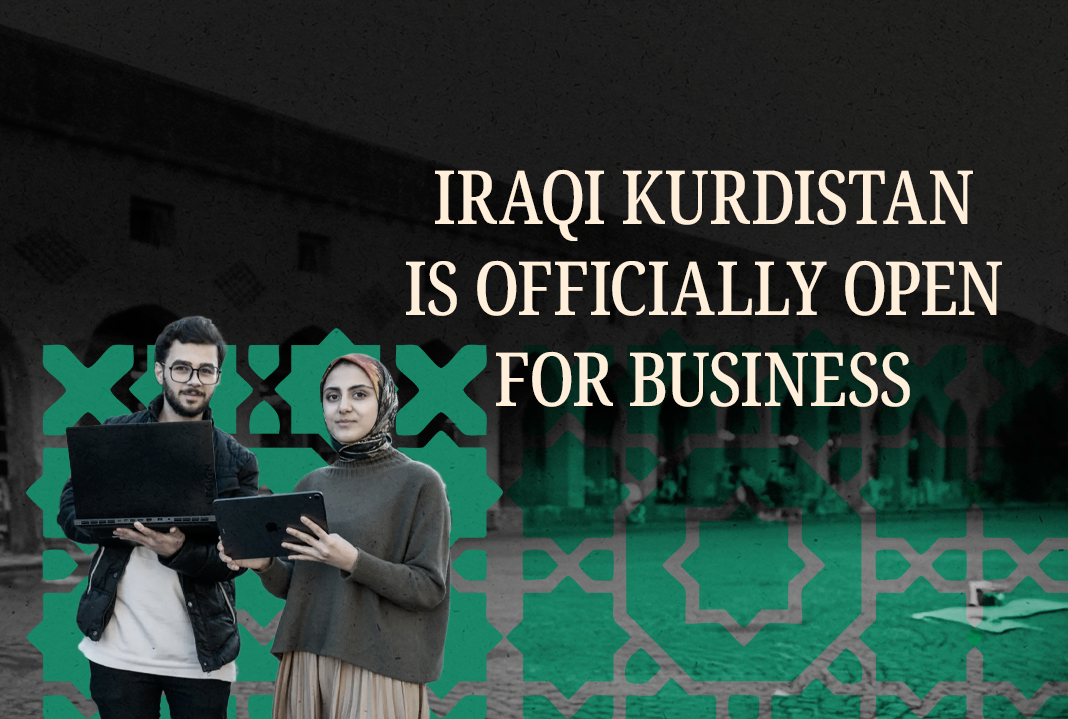
For decades, entrepreneurship in the Kurdistan Region of Iraq existed more as an aspiration than a reality. In practice, starting a business often meant months of delays, navigating regulations last updated in 1997, paying unnecessary legal fees, and dealing with a bureaucracy that discouraged new entrants. For young people, first-time founders, or those outside established patronage networks, the barriers were especially high, making formal business creation difficult to sustain. The cumulative effect of these hurdles was clear enough: many were effectively told not to bother.
We decided to bother anyway.
Over the past two years, Ideas Beyond Borders (IBB), together with our partners the Rwanga Foundation and ECHO, and with the support of the Atlas Network, set out to do something very unfashionable in the Middle East policy world: make the state get out of the way of people who want to work, build, and take risks.
After years of hard work, I am proud to say that Kurdistan is now officially open for business.
Business registration, which once took up to three months, can now be completed in 24 hours. Since the launch of the new online registration platform, more than 7,000 new companies have been registered, suggesting that thousands of people are opting into the formal economy now that the process is faster, clearer, and more predictable.
From day one, we focused on the boring but essential details most reformers avoid: procedures, regulations, interfaces, and incentives. When we approached the Kurdistan Regional Government with the idea of digitizing business registration, we discovered something rare in the region—a government that wanted the same thing. Our role was to push, support, pressure, and help translate good intentions into systems that actually work.
The new platform consolidates what used to be a maze of offices, stamps, and signatures into a single digital process. It is not perfect, and we do not pretend otherwise. But it works—and entrepreneurs are voting with their feet.
To stress-test the system, we did what we always do at IBB: we put real people into it. Through a startup competition targeting university seniors and young founders, more than 900 young people applied in a single week. Thirty were selected, funded, and asked to document every obstacle they encountered. Their feedback is now shaping the next round of improvements. Eighteen have already registered successfully. Three were named Young Entrepreneurs of the Year.
The real breakthrough came at the policy level, despite political paralysis. The Kurdistan Region’s Parliament has been largely dormant for nearly a year following the October 20, 2024, elections, holding only one session on December 2, 2024. The sixth term of parliament has been paralyzed by a deadlock between the dominant Kurdistan Democratic Party (KDP) and the Patriotic Union of Kurdistan (PUK) over the formation of a new government and the election of a parliamentary speaker.
No laws can be passed. The easy excuse would have been to wait. We didn’t.
Instead, we worked within existing authorities to remove some of the most punishing barriers facing small businesses. Lump-sum taxation was replaced with profit-based taxation. Multi-year tax exemptions for startups are being finalized. First-year founders no longer need to hire lawyers or accountants just to remain legally compliant. Home-based businesses are now allowed. These changes may sound technical, even small, but together they fundamentally alter the cost of entry into the formal economy.
This is what serious reform looks like in difficult environments. You don’t wait for perfect politics; you find leverage where it exists.
We point to these changes not as evidence that the system is fixed, but as proof of measurable progress. Thousands of new businesses have entered the formal economy, administrative processes are functioning more reliably, and policies are better aligned with how people actually work. Most importantly, a generation of young Kurds now understands that the problem was never their ambition—it was the rules.
There is still more to do. The 1997 Companies Law still requires updating, the digital platform will need continued refinement, and Parliament—when it reconvenes—must formalize these changes to ensure they endure. But the positive momentum is now unmistakable.
IBB exists to prove that freedom, opportunity, and institutional reform are not Western abstractions, but practical tools—and when applied seriously, they deliver results.
For people in Kurdistan who were once told their ideas would not survive the system, recent reforms have given them a fighting chance.
Kurdistan is officially open for business. And this time, it’s true.
Middle East Uncovered is powered by Ideas Beyond Borders. The views expressed in Middle East Uncovered are those of the authors and do not necessarily reflect the views of Ideas Beyond Borders.