


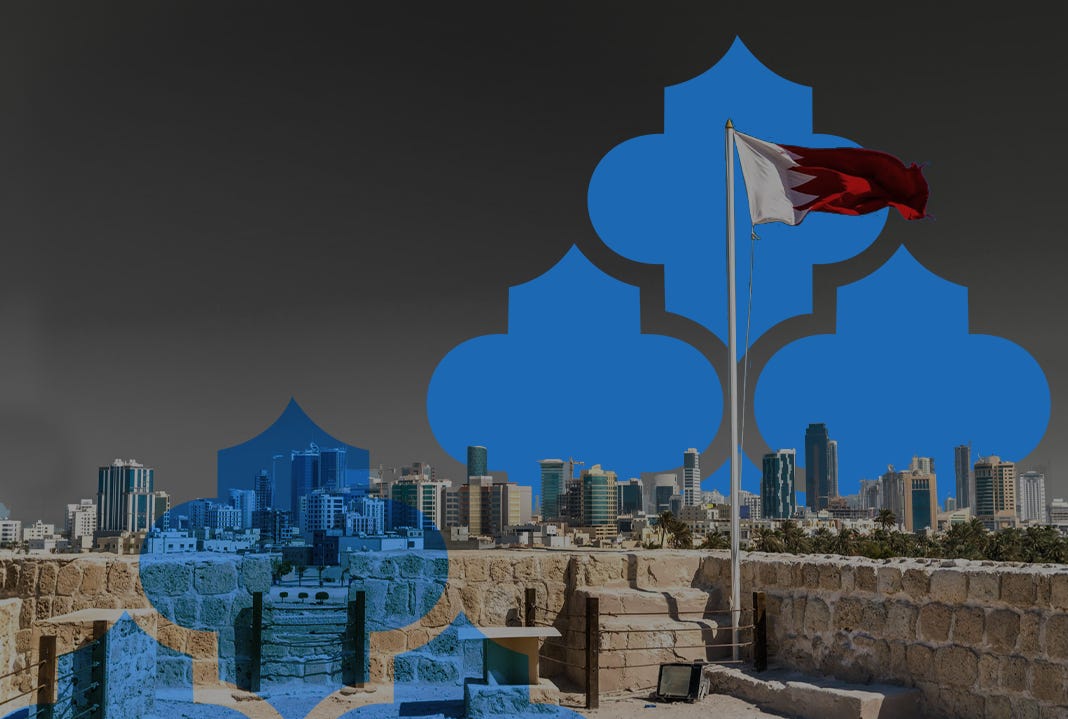
I’ve always thought of Bahrain, my home country, as a place where people of different beliefs and backgrounds can coexist. Our small island nation of around 1.5 million people has long prided itself on its tolerance, though we have never been completely free of extremist views or social tensions. On the morning of February 28, that coexistence faced an unprecedented test. Iran launched attacks on countries across the Gulf, and for the first time, the missiles were heading directly toward us.
While this was the first time Iran had attacked Bahrain directly, the threat posed by the Islamic Republic was hardly new. For 47 years, the Islamic Republic has been one of our most persistent external security concerns.
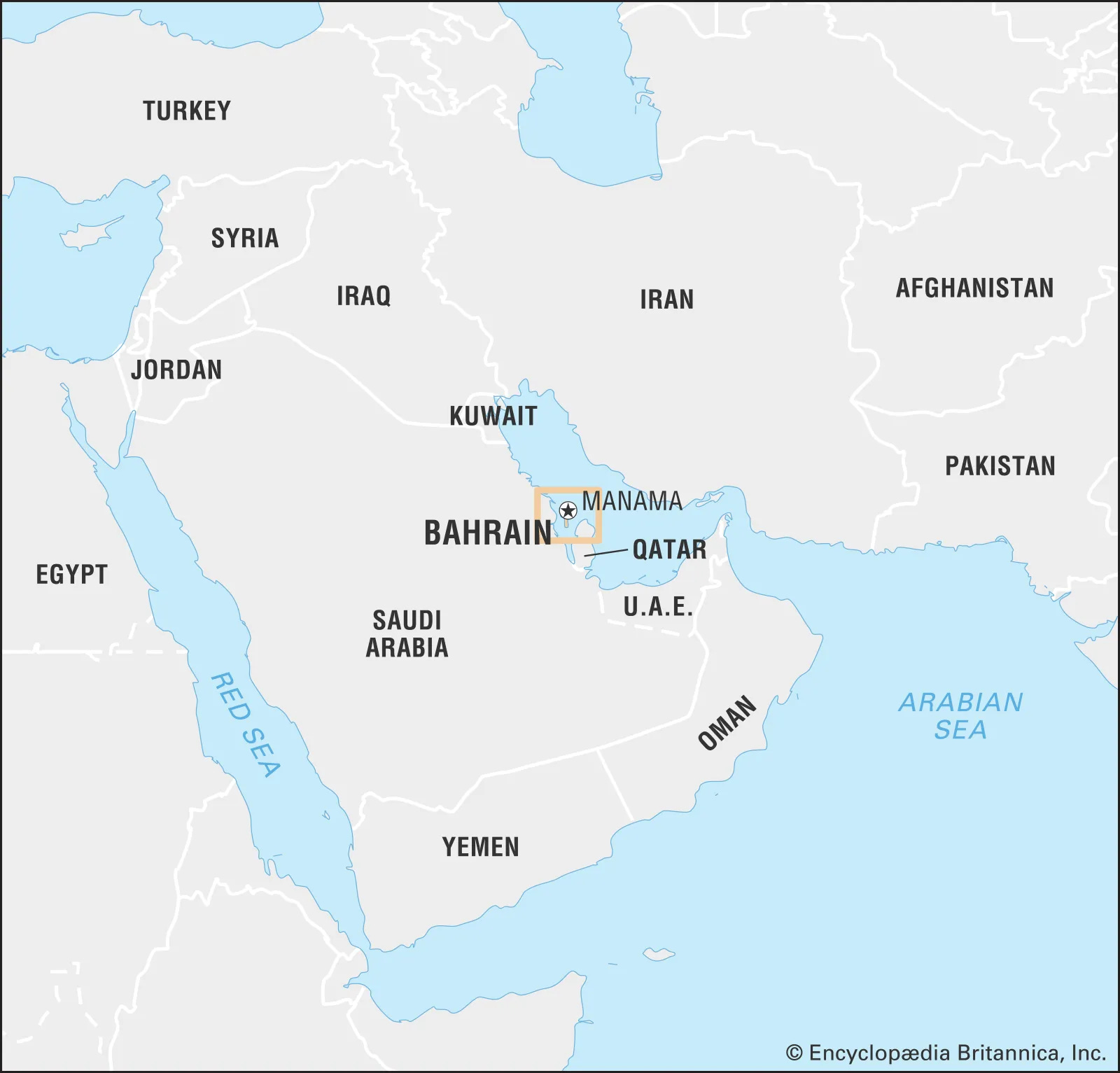
For over almost half a century, Bahrain has faced attempts to undermine the social cohesion that allows people of different religious beliefs, backgrounds, and political views to coexist. Many of the efforts were linked to Iran, including a foiled coup attempt in 1981 that sought to establish an Iranian-style republic, Iran-backed insurgents plotting to overthrow the government in the 1990s, the formation of Hezbollah Bahrain, and the stockpiling of weapons linked to the Islamic Revolutionary Guard Corps (IRGC).
Each element brought social divisions to the surface, fanned by influential figures reviving provocative historical narratives that positioned Bahrain as Iran’s “14th province.” Many of us dismissed these claims as political rhetoric, but they fuelled a Sunni-Shia divide that became particularly acute during the political unrest of 2011, when opposition groups called for the overthrow of the monarchy.
The attacks on February 28 gave those old warnings a very different meaning. Whatever people thought about Iran before the war, missiles and drones striking Bahraini territory were now a terrifying reality.
Waking to the sound of sirens and explosions took the island by surprise. Some of us reacted with disbelief. Others had expected this aggression in some way or another. As strikes continued throughout March, hitting the Crowne Plaza hotel in Manama, Bahrain International Airport, and the Mina Salman port area, fears that a direct attack from Iran would cause Bahrain’s social fabric to fray mounted.
Bahrain has a sizeable Shia Muslim population, including elements that are sympathetic to the Islamic Republic and its system of religious leadership. The death of Iran’s Supreme Leader Ali Khamenei threatened to unravel Bahrain’s uneasy security calculus. But the Iranian attacks changed a decades-old dynamic.
Over the ensuing months, more industrial, civilian, and military targets were hit amid further barrages as escalating tensions between the US, Israel, and Iran resulted in Iranian attacks across the Gulf. Bahrain, like many Gulf states, began publishing a regular tally of intercepted missiles and drones, reinforcing the population’s pride in our small island’s ability to defend itself against a powerful aggressor.
For some Shia Bahrainis, the attacks created a conflict between their religious allegiance to Iran’s leadership and their loyalty to Bahrain as a sovereign nation.
But the missiles did not distinguish between Sunni and Shia neighborhoods, political views, or religious beliefs. The onslaught transcended those distinctions, and people began to unite around the view that an attack on Bahrain was an attack on their country.
Shia MPs, journalists, public figures, and ordinary citizens alike condemned the aggression, with voices from across the Shia community distancing themselves from the actions of the Islamic Republic. Some continued to identify with the Iranian leadership, while Khamenei’s death prompted expressions of anger and protest. But they did not represent the broader response.
As ceasefires faltered and the missiles continued to bombard Bahrain, the simmering sectarian tension that many of us feared never materialized. Instead, Bahrainis largely stood together in the face of external aggression.
There are several possible explanations. Perhaps our society has matured. Maybe we are more aware of geopolitics and less willing to let regional conflicts shape our relations. Perhaps past experiences have taught us what division can do to a small country. And perhaps Bahrain’s history as a melting pot of cultures and beliefs is stronger than many realize.
Whatever the reason, when division was threatened, Bahrain chose unity.
The scale of the attacks Bahrain endured, which killed three civilians and injured 465 people, including women and children, has reshaped attitudes toward Iran. Whatever sympathy the Islamic Republic may once have enjoyed has been largely dismantled by the targeting of Bahraini territory and the damage to civilian areas and critical infrastructure.
We heard the explosions and endured the uncertainty of being under attack, watching as missiles were intercepted above us. The war changed how many of us in Bahrain view our country’s ability to defend itself. We saw an effective defense system in action that protected our way of life. By July 2, Bahrain had recorded 808 Iranian attacks since the beginning of the war: 203 ballistic missiles and 605 drones. For a country of Bahrain’s size and population density, those figures could have produced a catastrophe on a far greater scale.
The experience also changed how we understood national security. Military preparedness and regional security partnerships were no longer subjects discussed only by officials and analysts. We could see why they mattered. Despite the danger, life stayed remarkably close to normal for much of the conflict. Government institutions continued functioning and essential services remained available. Businesses stayed open, and people adapted to regular alerts.
The war has taken a toll. Bahrain has lost lives, civilians have been injured, homes have been damaged, and we have experienced attacks we never expected to face on our own soil. Yet the war has also revealed something exceptional about our country.
Many expected the attacks to expose divisions within Bahraini society, particularly along sectarian lines. Instead, I saw people stand together. That does not mean our political, religious, and social differences have disappeared. Bahrainis have disagreed before and will disagree again. But February 28 gave us a shared experience that cut across those differences. Whatever our disagreements, when Bahrain came under attack, we stood together as Bahrainis.
You might also like:
A Shabbat in Bahrain

Attending a Shabbat service isn’t how I typically spend my Saturday mornings. But at 8:30 a.m., I find myself seated inside a synagogue tucked into the heart of Manama, the capital of Bahrain. A young man stands at the lectern, reciting a Hebrew psalm in a gentle, rhythmic cadence. He’s dressed in a neon-green sports shirt, swaying slightly as he chants.
Middle East Uncovered is powered by Ideas Beyond Borders. The views expressed in Middle East Uncovered are those of the authors and do not necessarily reflect the views of Ideas Beyond Borders.

Interesting perspective, but for it to be complete and honest, you should have mentioned the hard facts that Iran has never attacked Bahrein before, that Iran was unjustifiedely, brutally attacked first, including the deliberate attack on a girls school which killed 167 of them with the first high precision missile and 40 minutes later with another to kill the parents and rescuers, a War Crime already proven and declared so by the United Nations.
And also that Bahrein has been all too happy to build and maintain the gigantic naval military base which hosts the War Criminal US Navy Fleet from which many attacks have been launched against Iran, including the innocent girls slaughter. I honestly believe you should be grateful Iran decided not to attack desalinization plants or the city, or oil infrastructure, which according to the UN Charter she is fully entitled to.
Best wishes to you ali decent Bahrenians.