


For years, Gaza has been reduced to images of war, destruction, and humanitarian catastrophe, while its historical and cultural depth has faded into the background. “Gaza, the Future Has an Ancient Heart. Materials and Memories of the Mediterranean,” a major international exhibition now open at Fondazione Merz in Turin until September 27, 2026, seeks to restore that lost dimension and present Gaza not only as a site of conflict, but as a place with a long and layered history.
The project is a collaboration between Fondazione Merz, Turin’s Museo Egizio, and Geneva’s Musée d'Art et d'Histoire (MAH), with the support of the State of Palestine. It brings together around eighty archaeological artifacts dating from the Bronze Age to the Ottoman period, placing them in dialogue with works by seven contemporary Palestinian and international artists. Together, the institutions frame the exhibition as both a scholarly undertaking and a public reflection on memory, identity, and responsibility.
An important aspect of the exhibition concerns the history of the artifacts themselves. The objects from Gaza shown in Turin are drawn from a wider collection of around five hundred pieces currently held in temporary custody at Geneva’s MAH on behalf of the State of Palestine. The collection had originally been intended as the foundation of a future archaeological museum in Palestine, a project left unfinished because of the conflicts that engulfed the region. Their display in Turin, therefore, also tells the story of a displaced heritage, preserved abroad while awaiting the possibility of return.
Beatrice Merz, president of Fondazione Merz and one of the exhibition’s curators, says the project inevitably carries political significance. “Art institutions do not operate in a neutral space: they are immersed in the present and must engage with what is happening in the world,” she says. “We believe it is important not to withdraw from this responsibility, especially in the face of complex and dramatic situations such as the Palestinian one.”
Yet Merz insists the role of culture differs from that of political campaigning. “Our intervention does not take the form of slogans or direct political positioning, but through the tools of culture: research, storytelling, and the construction of meaning.”
For years, the name Gaza has been associated almost exclusively with bombardment, siege, hunger, and ruin. The Turin exhibition seeks to recover a much longer, nuanced history. Since antiquity, Gaza served as a strategic node linking Africa, Asia, and Europe—a gateway, trading center, and meeting place of cultures.
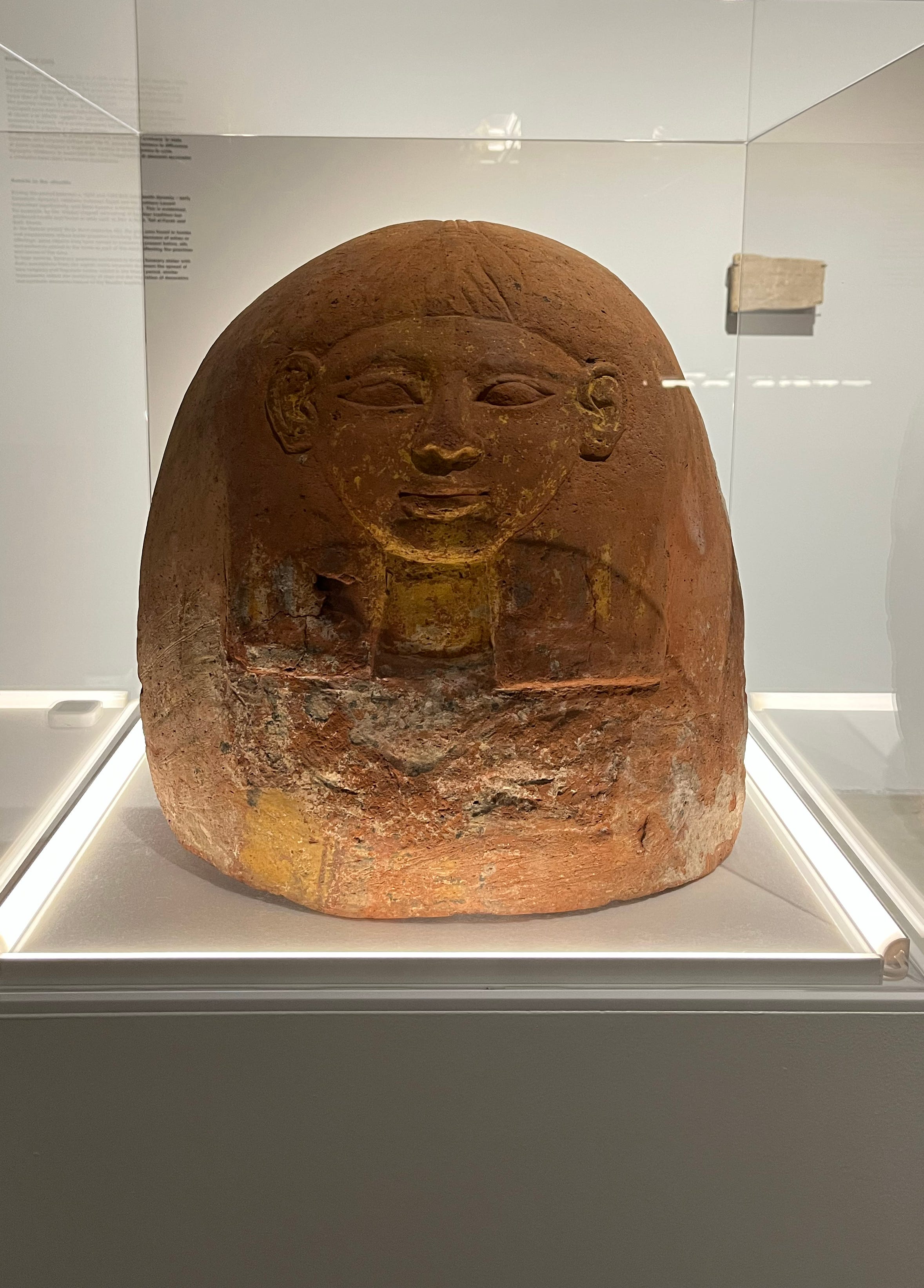
The artworks on display reveal that layered history. Ceramics, amphorae once used to carry the famous “Gaza wine,” coins, amulets, sarcophagi, and artifacts from Egypt, Greece, Babylon, and the Arabian Peninsula all testify to centuries of trade, cultural exchange, and overlapping identities.


The exhibition is organized into four thematic sections. The first, “Past, Present and Future in Danger,” examines the destruction of cultural heritage. It considers not only ruined monuments and damaged archaeological sites, but also the disappearance of communities that inhabited, celebrated, and protected those places.
Further sections present Gaza as a bridge between Europe, Africa, and Asia, tracing the movement of goods, ideas, and people across the Mediterranean and the Levant. Everyday objects, funerary remains, and religious artifacts show a territory shaped by coexistence, adaptation, and cultural mixing over nearly five thousand years. The exhibition also includes photographs from the UNRWA archive, offering rare glimpses of civic life, streets, and families in Gaza before the current destruction.
A parallel public program of talks, film screenings, workshops, and music performances extends these themes beyond the gallery itself, connecting archaeology to contemporary political debate. Turin’s National Cinema Museum also hosted a retrospective dedicated to Palestinian director Kamal Aljafari, expanding the citywide focus on Gaza’s cultural voices. In this sense, Gaza is presented not only as a local tragedy, but as part of a broader global pattern in which war threatens memory, heritage, and cultural life itself.
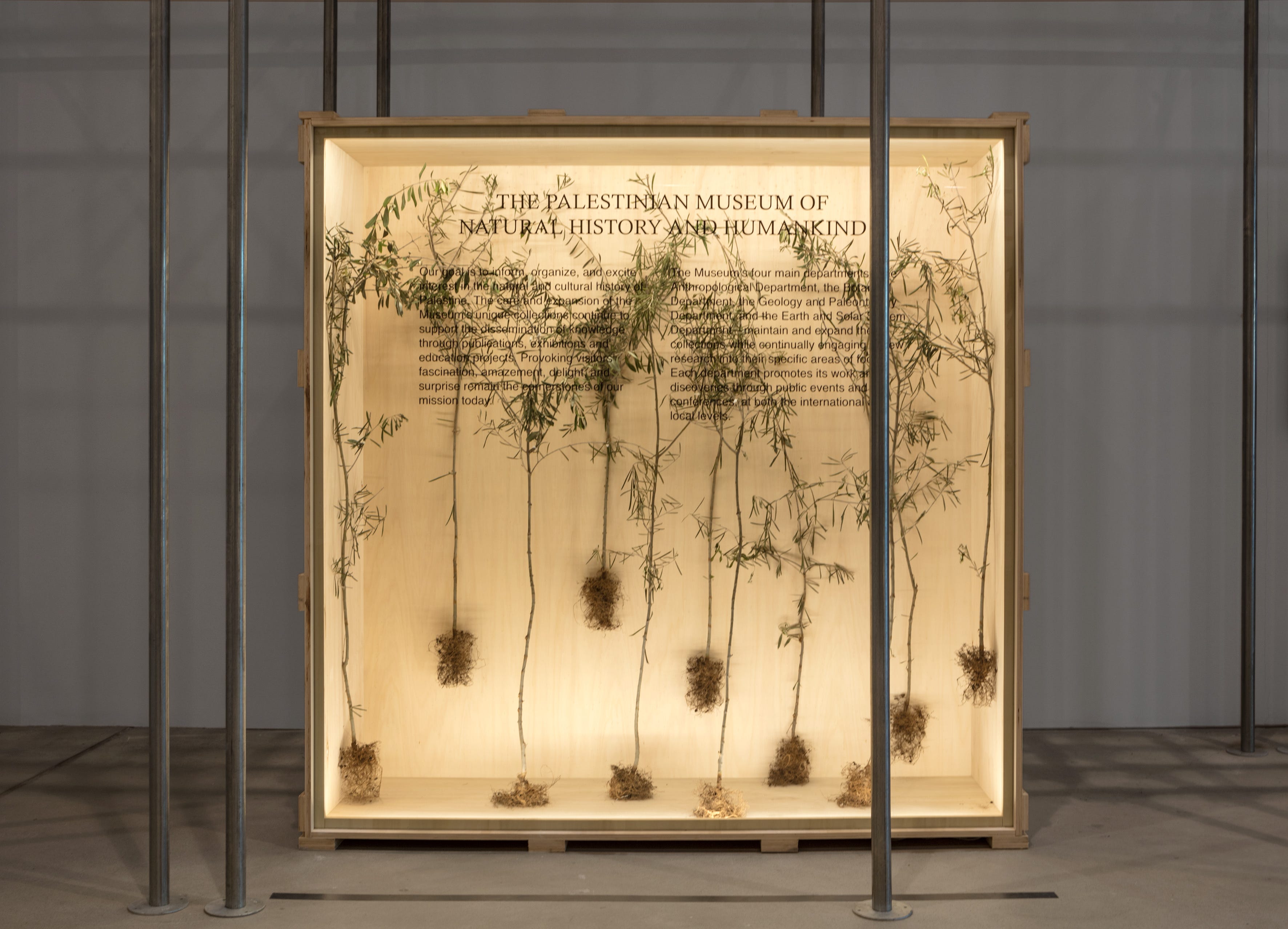
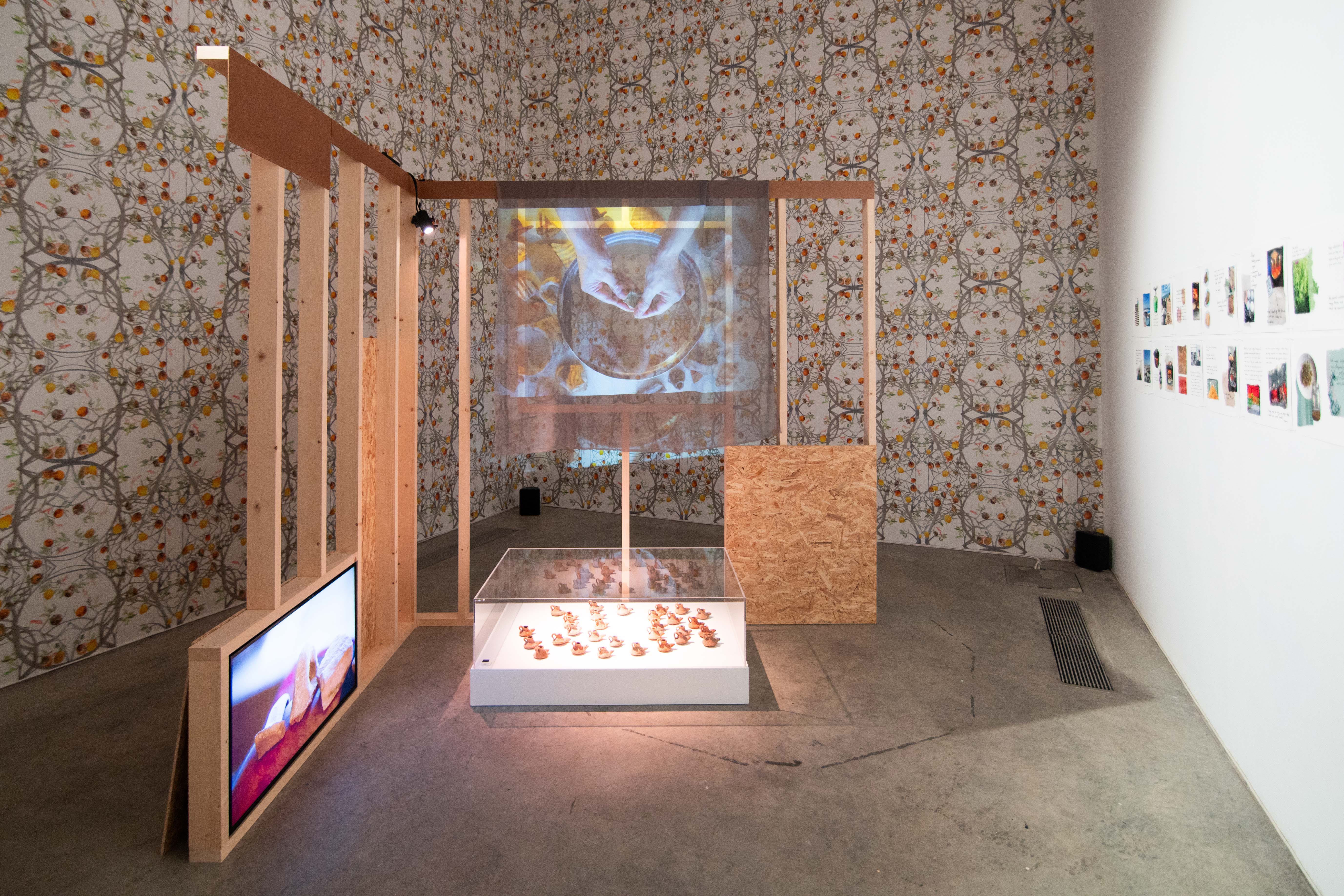
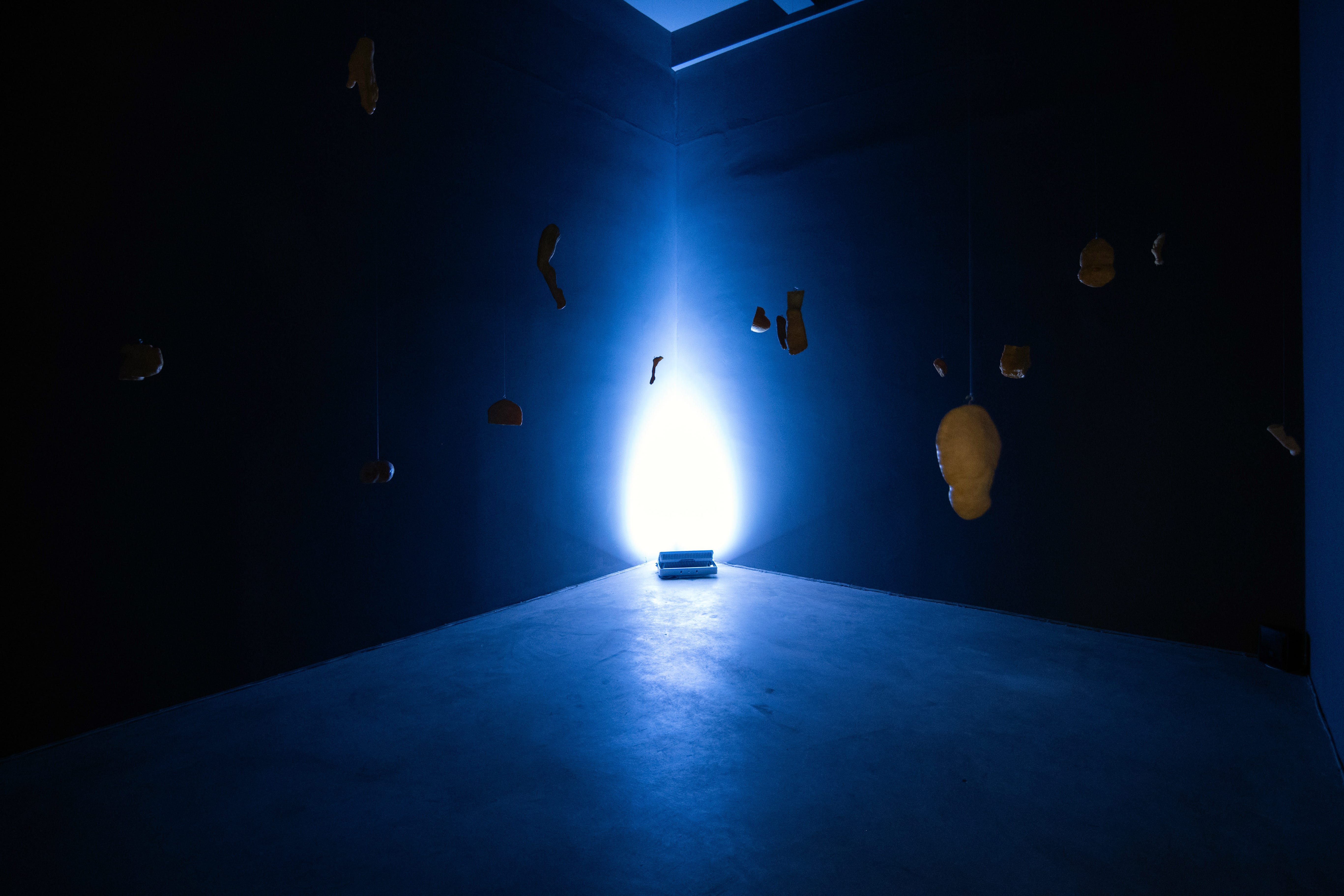
Alongside the ancient artifacts are works of art by Samaa Emad, Mirna Bamieh, Khalil Rabah, Vivien Sansour, Wael Shawky, Dima Srouji, and Akram Zaatari. Their presence is central to the curatorial concept.
“From the beginning, the project was built in direct dialogue with the invited artists,” Merz explained, “the selection of works emerged through continuous exchange.” Their involvement helped avoid an external or purely Western perspective on Palestinian history and present realities.
“The contemporary works do not simply accompany archaeological objects; they establish a living and necessary dialogue with them,” Merz says, “if the ancient objects restore historical depth and make the destruction of cultural heritage tangible, the artists’ works question memory in the present, through loss, resistance and survival”. Several works focus on food, seeds, domestic rituals, and photography as carriers of identity. Others confront exile, fragmentation, and mourning, suggesting that memory can remain active even when land, homes, and institutions are under threat.
The exhibition’s title holds an unresolved tension between future and past. Asked where Gaza’s future lies today, Merz offers no easy answer: “It would be reassuring to say clearly where Gaza’s future lies, but that very possibility is constantly being called into question.”
Instead, she says, the future has become something uncertain and suspended. “More than a defined place, the future appears as something fragile, exposed to the uncertainty of the present.”
Memory is a vital resource: “Gaza’s long history, cultural density and enduring identity are fundamental elements for imagining a future not reduced to permanent emergency.”
The title echoes the thought of Italian writer Carlo Levi. “The idea is that the future is never separate from the past, but carries within it traces, layers and inheritances,” Merz noted, “looking back is not nostalgia, but a necessary condition for imagining what may still come.”
Beyond the exhibition itself, the program includes talks, workshops, film screenings, music, and book presentations focused on Palestinian culture and history.
At a time when debate over the Middle East across Europe is increasingly shaped by polarization, prejudice, and instant reaction, Turin has chosen a different approach rooted in historical depth and cultural memory. The exhibition does not pretend to solve the conflict or substitute for politics. But it insists on something essential that is often lost amid the noise of war. Gaza is not only the site of a present catastrophe. It is also an ancient, plural, Mediterranean city with a history that long predates its destruction. Recovering that memory cannot end the conflict, but without it, any meaningful future risks becoming impossible.
Middle East Uncovered is powered by Ideas Beyond Borders. The views expressed in Middle East Uncovered are those of the authors and do not necessarily reflect the views of Ideas Beyond Borders.
