


After a rocky start to January and a wave of escalations across the region, the Middle East once again finds itself on the brink of a wider conflict. U.S. threats against Iran, combined with the continued deployment of heavy military hardware and rising tensions in Syria and Lebanon, have signaled a long and volatile winter ahead.
Iraq, however, has been notably quiet.
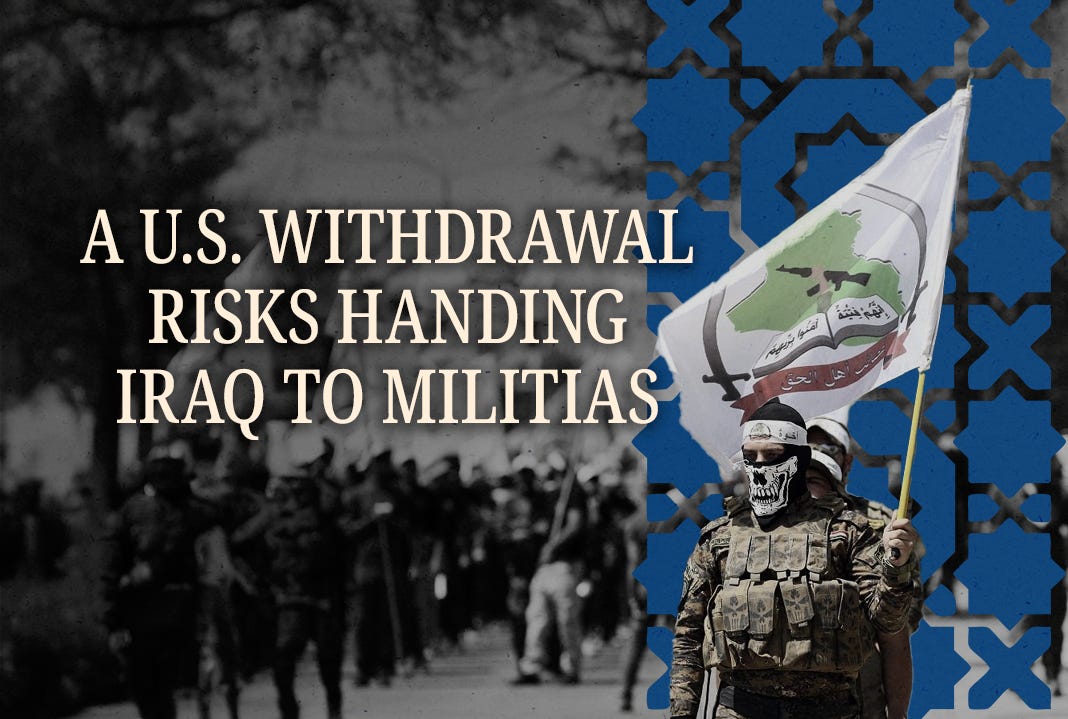
Since President Donald Trump returned to office, Iranian-backed militias in Iraq have largely stood down from operations. Militia leaders have attributed this pause to an informal truce reached with the Iraqi government, ostensibly to allow time for negotiations over a potential U.S. military withdrawal.
Iraq specialists and regional observers widely view these claims as a smokescreen. Rather than a goodwill gesture, the lull is seen as an attempt by militias to avoid appearing weak or ineffective in the face of a hardened “Trump 2.0” U.S. policy toward Iraq. President Trump has made clear that any attacks on U.S. forces would be met with a tremendous response—a threat that militias have experienced firsthand.
In December 2019 and January 2020, the United States struck Kataib Hezbollah, killing a significant number of its fighters. Days later, the U.S. delivered an even heavier blow by assassinating Iranian General Qassem Soleimani and Iraqi Popular Mobilization Forces powerbroker Abu Mahdi al-Muhandis in Baghdad. Those events remain deeply embedded in militia calculations today.
The current outlook among militia leaders is bleak. Iran is weaker than it has been in decades, and its ability to shield its Iraqi proxies is increasingly constrained. At the same time, pressure from the United States continues—both through its embassy in Baghdad and via the newly appointed special presidential envoy to Iraq.
Compounding the pressure is a renewed domestic push to disarm militias, reportedly backed by Iraq’s head of the judiciary. This has left militias with few options beyond escalating their rhetoric. Notably, a simple U.S. troop withdrawal no longer appears sufficient to meet their demands.
Leaders from several militia factions have called for the complete withdrawal of all U.S. forces, including those stationed in the Kurdistan Region, as well as the removal of NATO advisers from Iraq. Such demands reinforce concerns that a full U.S. withdrawal would do little to stabilize Iraq. Instead, it risks entrenching the existing power vacuum and emboldening militias, who would portray a U.S. exit as a strategic victory.
Washington must carefully calculate the risks of a full withdrawal, particularly given Iraq’s unstable political landscape and renewed threats from ISIS attempts to regroup in neighboring Syria. Shifting dynamics in eastern Syria could once again create fertile ground for jihadist groups seeking to destabilize both Iraq and Syria. Continued monitoring and rapid response capabilities remain critical to counterterrorism efforts.
Beyond security, the U.S. presence provides a protective umbrella for American and foreign investments in Iraq and serves as a vital safety net for Erbil and moderate political forces in Baghdad. Without it, the risk of a militia-driven takeover of state institutions would increase significantly.
Absent stability and credible deterrence, Iraq could also be left exposed to expanded influence from hostile external actors eager to widen their foothold in the war-battered country.
A U.S. withdrawal, far from weakening militias, may ultimately strengthen them—unless it is paired with a clear strategy to address the deeper political, security, and institutional vulnerabilities they continue to exploit.
Middle East Uncovered is powered by Ideas Beyond Borders. The views expressed in Middle East Uncovered are those of the authors and do not necessarily reflect the views of Ideas Beyond Borders.

you hit the spot, keep going brother🖤
I think America’s military withdrawal from Iraq and the entire Middle East is inevitable. Its debt stands at nearly 40 trillion and is now growing faster than its economy and its archaic political system is imploding under the weight of its poor finances and changing demographics. It will most likely follow a Soviet style trajectory and be forced to withdraw all its forces from the entire region within the next 10-15 years. The recent pact between Pakistan and Saudi suggests some of the region’s states already see the writing on the wall, but most of the region’s governments appear blind to the reality of America’s looming implosion.
https://open.substack.com/pub/mirrorsfortheprince/p/americas-decline-will-bring-chaos?r=v623r&utm_medium=ios